
The Silent Crisis Within Commercial Ventilation Systems
In the bustling metropolitan landscape of Hyderabad, where commercial infrastructure continues to expand at an unprecedented pace, a silent yet persistent challenge threatens the health of building occupants and the efficiency of operational facilities. The intricate network of HVAC ducts that snakes through office towers, hospitals, shopping malls, and industrial complexes has become a repository for dust, allergens, microbial growth, and hazardous particulates. These contaminants, invisible to the naked eye, circulate relentlessly through indoor environments, compromising air quality and placing immense strain on mechanical systems.
The year 2026 marks a pivotal moment in facility management across India. The global robotic HVAC duct cleaning market, valued at USD 1.34 billion in 2025, is projected to reach USD 1.48 billion in 2026, growing at a compound annual rate of 12.16%. This remarkable growth reflects a fundamental shift in how facility managers, building owners, and healthcare administrators approach indoor air quality management. Hyderabad, as a major commercial and healthcare hub, stands at the forefront of this transformation.
Understanding Robotic HVAC Duct Cleaning Technology
The Evolution from Manual to Automated Solutions
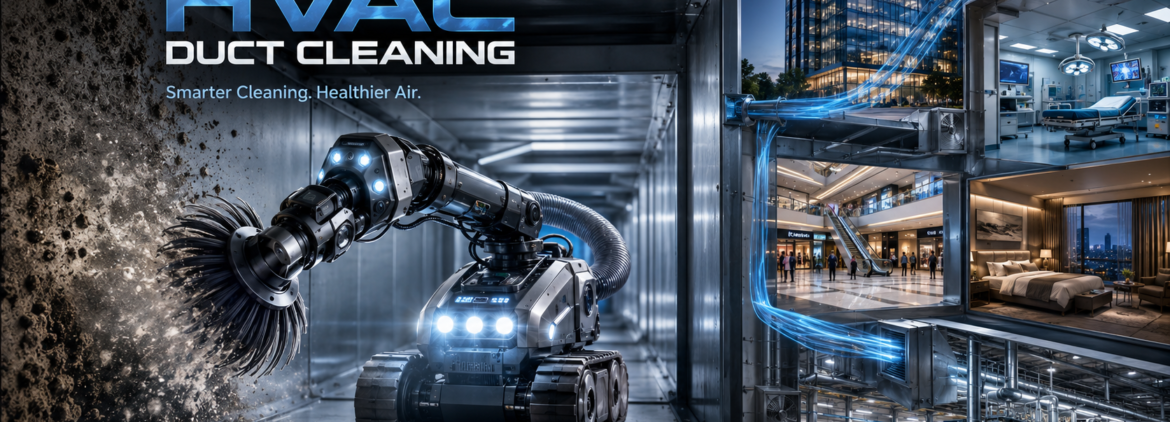
Robotic HVAC duct cleaning represents a paradigm shift in ventilation system maintenance. Unlike traditional methods that relied heavily on manual labour and offered limited visibility into duct interiors, modern robotic systems integrate advanced robotics with precision cleaning technologies to deliver thorough, safe, and efficient duct maintenance. These sophisticated systems are equipped with high-definition cameras, sensors, rotating brushes, air whips, and powerful vacuum mechanisms that navigate complex duct networks with remarkable precision.
The technology encompasses various robotic configurations, including fully automated robots that operate autonomously, semi-automated units requiring technician guidance, and specialised inspection robots equipped with cameras and sensors to assess duct conditions and identify areas requiring attention. Brush robots physically remove dirt and debris, scrubber robots tackle tough grime using cleaning solutions, suction robots collect loose debris, and ozone spray robots provide comprehensive sanitisation.
The Systematic Cleaning Process
The robotic duct cleaning methodology follows a structured, transparent process that ensures comprehensive results. The journey begins with a thorough inspection using high-definition robotic cameras, allowing technicians to identify dust accumulation, microbial growth, and blockages while providing clients with real-time visibility into their ductwork’s internal condition. This initial assessment informs a customised cleaning plan tailored to address specific contaminants and system configurations.
The robotic unit, guided by skilled technicians, navigates through the duct system, dislodging debris while simultaneously vacuuming it out. The camera system provides continuous real-time monitoring, eliminating the guesswork often associated with manual cleaning methods. Following the mechanical cleaning, eco-friendly disinfectants or antimicrobial agents can be applied via the robotic system to eliminate bacteria, mould spores, and viruses, ensuring long-lasting hygiene. A final inspection verifies the effectiveness of the cleaning process, providing clients with documented assurance that their ductwork meets rigorous cleanliness standards.
The Critical Importance of Clean HVAC Ducts for Operational Facilities
Health, Productivity, and Regulatory Compliance
HVAC systems function as the respiratory system of any building, circulating air that directly impacts occupant health, comfort, and productivity. Over time, ducts accumulate layers of dust, bacteria, mould, and volatile organic compounds that are then circulated throughout the indoor environment. Without regular cleaning, this buildup can reduce airflow and energy efficiency, trigger respiratory issues and allergies, create foul odours, lead to microbial growth and contamination, and significantly shorten the lifespan of HVAC systems.
For operational facilities in Hyderabad, the stakes are particularly high. Indian metros rank among the most polluted in the world, with fine particulate matter such as PM2.5 and PM10 seeping into buildings through ventilation systems. Poor indoor air quality directly correlates with reduced cognitive performance, low concentration, and frequent health complaints from staff. Robotic cleaning removes allergens, mould spores, and hidden dust, ensuring cleaner air and healthier employees.
Energy Efficiency and Operational Cost Reduction
The financial implications of neglected ductwork are substantial. Clogged or dirty ductwork forces HVAC systems to work harder, leading to higher energy consumption and increased operational costs. Clean ducts allow air to flow freely, improving system efficiency and lowering electricity bills. Research from the University of Colorado-Boulder and the University of Pavia demonstrates that HVAC system cleaning is crucial for improving and maintaining energy efficiency, with cleaned systems saving blower energy in nearly all examined cases.
Regular maintenance, including robotic duct cleaning, prevents wear and tear on HVAC systems, reducing strain on components and significantly extending equipment operational life. For facility managers responsible for large commercial complexes in Hyderabad, this translates into tangible cost savings and improved operational reliability.
Hyderabad’s Growing Adoption of Robotic Duct Cleaning
Healthcare Sector Leadership
Hyderabad’s healthcare sector has emerged as a significant adopter of robotic HVAC duct cleaning technology. The Employees State Insurance Corporation recently invited open tenders for HVAC Robotic Duct Cleaning at the ESIC Super Speciality Hospital in Sanathnagar, Hyderabad. This government initiative underscores the growing recognition that healthcare facilities require the highest standards of duct hygiene to prevent the spread of airborne infections and protect vulnerable patients.
Hospitals and clinics demand strict hygiene standards, and robotic cleaning offers thorough sanitisation for sensitive environments. The technology’s ability to provide traceable documentation and contamination control makes it particularly valuable for healthcare settings where audit readiness and regulatory compliance are paramount.
Commercial and Industrial Applications
Beyond healthcare, Hyderabad’s commercial landscape has embraced robotic duct cleaning across multiple sectors. Corporate offices, shopping malls, hotels, and data-driven facilities benefit from the technology’s non-invasive approach and minimal operational disruption. Robotic systems can navigate long duct lengths with limited downtime windows, making them ideal for facilities that cannot afford extended shutdowns.
Industrial plants with particulate-heavy lines and confined spaces also rely on robotic solutions to maintain safe working environments and ensure compliance with health and safety regulations. The technology’s precision and documentation capabilities support preventive maintenance planning through visual analytics, enabling facility managers to make data-driven decisions about cleaning schedules and system maintenance.
The Competitive Advantages of Robotic Over Traditional Methods
Unmatched Precision and Thoroughness
Robotic systems deliver a level of precision that traditional manual methods simply cannot match. Camera-guided cleaning ensures every section of the duct is inspected and cleaned, including hard-to-reach areas that are often challenging with manual approaches. Robots can access inaccessible corners and provide consistent cleaning, significantly improving the overall efficiency and thoroughness of duct cleaning operations.
Enhanced Safety and Accessibility
Safety considerations represent a compelling advantage of robotic cleaning. Traditional methods often require human entry into confined or hazardous spaces, exposing technicians to dust, mould, and other contaminants. Robots eliminate this need, ensuring the safety of technicians while minimising occupational risks. This is particularly valuable in healthcare and industrial settings where ductwork may contain hazardous materials or pathogens.
Time Efficiency and Documentation
Automated cleaning reduces downtime for businesses by completing the process faster while maintaining superior quality. Robotic systems can clean more quickly than traditional methods, reducing labour costs and minimising errors. Furthermore, robotic systems provide comprehensive video documentation of before-and-after conditions, offering transparency and proof of work that satisfies facility managers, auditors, and regulatory bodies.
Industry Standards and Certification
The National Air Duct Cleaners Association (NADCA) has established internationally recognised standards for HVAC cleaning and restoration. NADCA certification ensures adherence to global industry standards, guaranteeing that cleaning services meet rigorous quality and safety requirements. In India, where pollution levels are rising and indoor air quality is increasingly critical, adherence to NADCA standards guarantees that HVAC systems operate optimally, reducing risks of allergies, respiratory problems, and costly equipment failures.
Service providers following NADCA standards employ source removal methods, the only acceptable way to properly clean and decontaminate air duct systems. This approach, combined with robotic technology, ensures that contaminants are physically removed from the system rather than simply redistributed.
The Future of HVAC Maintenance in Hyderabad
The outlook for robotic HVAC duct cleaning remains highly promising, supported by growing awareness of indoor air quality and technological innovation. Emerging trends include condition-based maintenance, where sensors and pressure data trigger cleaning cycles; greener chemistries with low-VOC agents and water-optimised processes; AI-assisted inspections with automated defect tagging from camera feeds; and integrated reporting with digital logs mapped to floors, zones, and compliance needs.
As Hyderabad continues to develop as a premier commercial and healthcare destination, the demand for advanced HVAC maintenance solutions will only intensify. Facility managers who embrace robotic duct cleaning technology position their organisations at the forefront of operational excellence, ensuring healthier indoor environments, greater energy efficiency, and enhanced regulatory compliance.
About D-SOL Facilities
D-SOL Facilities Pvt. Ltd. stands as a premier integrated facility management partner specialising in advanced HVAC duct cleaning, robotic IAQ solutions, and comprehensive infrastructure services across India. The company offers a complete spectrum of services including robotic HVAC duct cleaning, robotic kitchen duct cleaning, AHU health audits, air balancing, IAQ monitoring, and fire safety compliance solutions.
D-SOL Facilities differentiates itself through its commitment to NADCA-certified standards, state-of-the-art robotic technology, and a structured approach that prioritises precision, safety, and minimal operational disruption. The company’s end-to-end documentation, from pre-cleaning inspection to post-cleaning validation through visual and microbial reports, ensures complete transparency and client satisfaction. With expertise spanning corporate offices, hospitals, hotels, shopping malls, and industrial facilities, D-SOL Facilities delivers solutions that enhance indoor air quality, optimise system performance, and ensure compliance with health, fire safety, and environmental norms.
Contact Us
Call for reservation: +91 84483 96120 | +91 8448396121
Email: rohit@dsolfacilities.com | hemraj@dsolfacilities.com
Website: https://dsolfacilities.com/