
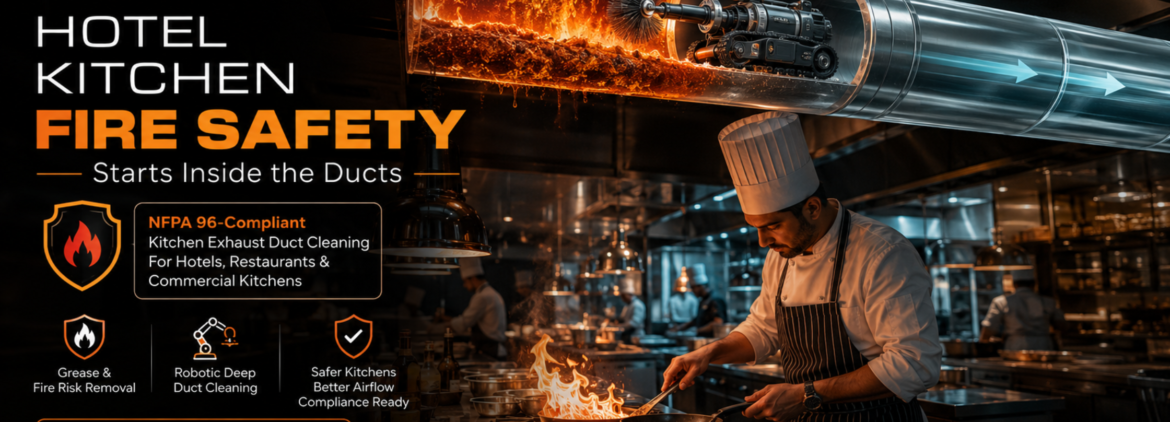
The relentless hum of a high-volume hotel kitchen is the heartbeat of the hospitality industry, a symphony of sizzling pans and boiling pots that never truly pauses. Yet, operating within Mumbai’s bustling culinary scene comes with a silent, formidable responsibility that extends far beyond the menu. While chefs focus on culinary excellence, a hidden threat often accumulates where no one looks within the labyrinth of the kitchen exhaust duct system. For hotels, restaurants, and commercial food service establishments across the city, professional Kitchen Exhaust Duct Cleaning is not merely a hygiene recommendation; it is an absolute mandate for fire safety, regulatory compliance, and operational continuity.
The Regulatory Imperative: Understanding Fire Safety Compliance in Mumbai
In the high-stakes environment of a commercial hotel kitchen, grease accumulation within exhaust ducts represents one of the most underappreciated yet catastrophic hazards. Grease-laden vapours generated during cooking operations condense on interior surfaces of hoods, ducts, and exhaust fans, forming a highly combustible layer. Left unaddressed, this buildup transforms a kitchen exhaust system into a potential ignition source capable of spreading fire rapidly throughout a building’s vertical shaft. The National Fire Protection Association (NFPA) Standard 96, universally recognised as the authoritative code for ventilation control and fire protection of commercial cooking operations, mandates that hoods, ducts, and fans must be cleaned to bare metal at frequent intervals to prevent dangerous grease accumulation. The code further stipulates that when routine inspections reveal contamination from grease-laden vapours, the entire exhaust system must undergo professional cleaning by properly trained and certified personnel.
Beyond NFPA compliance, hotel kitchens across Maharashtra must adhere to guidelines issued by the Central Pollution Control Board (CPCB), which has released fresh standards for pollution control at hotels, banquet halls, restaurants, and motels. The National Building Code of India (NBC 2016) serves as the central standard for fire prevention, prescribing specifications on building design, erection, installation, and maintenance. Non-compliance can result in closure notices, legal penalties, and invalidation of insurance coverage in the event of a fire incident. Insurance providers and fire inspectors increasingly require documented proof of cleaning in accordance with NFPA 96 regulations. Facility managers across Mumbai, Navi Mumbai, and Pune maintain comprehensive logs of all exhaust system cleanings, including service dates and current system condition.
Why Grease Accumulation Poses a Greater Threat Than You Imagine
Commercial kitchens generate tremendous volumes of oily vapours that settle inside exhaust ducts and hoods. Over time, this grease buildup becomes highly flammable, significantly increasing the risk of kitchen fires. Professional kitchen exhaust duct cleaning services focus on deep removal of grease deposits using advanced tools, ensuring safety without disrupting kitchen operations.
The statistics are sobering: India records approximately 1.6 lakh fire incidents annually, resulting in over 27,000 deaths. While the majority of these occur in residential spaces, commercial casualties are rising due to mixed-land violations. Grease accumulation in kitchen exhaust systems stands as one of the leading causes of kitchen fires. During cooking, oil vapours rise and settle inside ventilation systems, and infrequent hood and duct cleaning remains the primary contributing factor. Commercial cooking operations account for the majority of such fires, with a substantial percentage directly attributed to dirty kitchen hood exhausts.
The danger is magnified in high-volume settings. When fans and ducts become choked with grease and debris, the system must work much harder to pull air through. This increased strain leads to higher energy consumption and significantly inflated utility bills, silently draining profits. Moreover, poor indoor air quality directly links to respiratory issues, allergies, fatigue, and reduced workplace productivity.
The Anatomy of Professional Grease Removal: A Methodical Process
True kitchen exhaust duct cleaning is a comprehensive, multi-stage operation that addresses every component from cooktop to rooftop. The process begins with a thorough pre-inspection and safety preparation, where technicians assess the system’s condition and identify any structural concerns. Removal of baffle or mesh filters follows, with these components undergoing deep soaking in heated degreasing solutions to dissolve grease trapped inside narrow channels and crevices.
The exhaust duct degreasing phase represents the most critical step. Specialists gain access to and meticulously scrape and clean the internal surfaces of all accessible ductwork, from the canopy to the discharge point, using specialist tools and degreasing agents. Complete exhaust system degreasing must extend from the hood canopy, through the ductwork, to the exhaust fan housing and blades, leaving no component untreated. Power-washing of immediate ducts and hoods removes contaminants from every nook and cranny, while runoff water is simultaneously vacuumed to prevent any mess.
Finally, all stainless steel surfaces are dried using chamois and towels. The cleaning standard is “bare metal” per NFPA 96 and IKECA C10 requirements, meaning the entire exhaust system must be cleaned to the original metal surface, with documentation provided as a cleaning certificate posted in the kitchen. A typical thorough cleaning for a standard kitchen exhaust system takes between three to four hours.
Establishing a Cleaning Schedule for High-Volume Hotel Kitchens
The required cleaning frequency under NFPA 96 is determined by the volume and type of cooking operations, not by arbitrary guesswork. For high-volume hotel kitchens operating 24 hours or those using charbroilers, deep fryers, and solid fuel cooking equipment, cleaning is typically required weekly to every 30 days. Kitchens with standard daily service operating typical hotel restaurant equipment can maintain hood cleanliness on a 30 to 90-day cycle, provided regular inspections confirm safety and cleanliness.
For exhaust systems serving solid fuel cooking operations such as tandoor ovens or wood-fired grills, monthly cleaning is mandated by the code. Hoteliers should remember that cleaning frequency is not static; if routine inspections reveal heavier-than-expected grease accumulation, the schedule must be adjusted accordingly. NFPA 96 specifies cleaning frequency based on kitchen activity levels: monthly for high-volume kitchens like fast food restaurants and 24-hour diners, and quarterly for casual dining and hotel kitchens. Each facility should consult with a professional cleaning provider to establish a tailored schedule that ensures safety without unnecessary operational disruption.
The Undeniable Benefits of Professional Kitchen Exhaust Duct Cleaning
Investment in professional kitchen exhaust duct cleaning yields dividends across multiple dimensions of hotel operations. Foremost among these is fire risk mitigation—the primary objective. Regular commercial kitchen fire prevention through thorough cleaning drastically reduces the fuel load within the ventilation system, mitigating the risk of a catastrophic grease fire. This protects lives, assets, and the hotel’s reputation.
Operational efficiency constitutes another compelling benefit. A clean exhaust system improves airflow, lowers energy costs, and extends the life of kitchen equipment. When fans and ducts remain free from grease and debris, the system operates at optimal performance, resulting in lower utility bills and better overall function. Additionally, routine cleaning ensures compliance with local hygiene standards, creates a safer and more pleasant kitchen environment, and prevents unpleasant odours that can permeate dining spaces.
For hotels seeking to elevate their cleanliness standards, professional duct cleaning demonstrates a commitment to guest and staff safety that distinguishes them in a competitive marketplace. It reflects operational excellence and responsible management qualities that insurance providers and fire inspectors increasingly demand.
Your Trusted Partner for Kitchen Exhaust Duct Cleaning in Mumbai
In a city that never sleeps, hotel kitchens require a cleaning partner who understands the urgency, the regulations, and the technical intricacies of commercial ventilation systems. D-SOL Facilities Pvt. Ltd. provides industry-leading duct cleaning solutions for hotels, restaurants, corporate offices, malls, hospitals, and industrial units across India. The company specializes in AHU Health Audits, Indoor Air Quality (IAQ) Solutions, and Robotic AC Duct Cleaning, ensuring a safer and more efficient environment for every client. With a team of trained experts and a fleet of technologically advanced robotic units, D-SOL offers high-precision duct cleaning that delivers thorough internal cleaning even in complex duct networks, without damaging the system. Their comprehensive services include professional kitchen exhaust duct cleaning involving degreasing of the entire exhaust system hoods, fans, filters, and ductwork carried out in strict accordance with NFPA 96 standards. The company also provides fireproofing for ceilings, mezzanines, and protected zones, integrated fire safety planning, water tank cleaning, facade cleaning, and more. D-SOL Facilities operates with a commitment to regulatory compliance, operational efficiency, and absolute safety, making them the trusted choice for kitchen exhaust duct cleaning in Mumbai and beyond.
D-SOL Facilities Pvt. Ltd.
📞 Call for reservation: +91 84483 96120 | +91 8448396121
📧 Email: rohit@dsolfacilities.com | hemraj@dsolfacilities.com
🌐 Website: https://dsolfacilities.com/
Ensure the safety of your kitchen and the well-being of your staff with professional, NFPA 96-compliant kitchen exhaust duct cleaning services tailored for Mumbai’s high-volume hotel kitchens.