
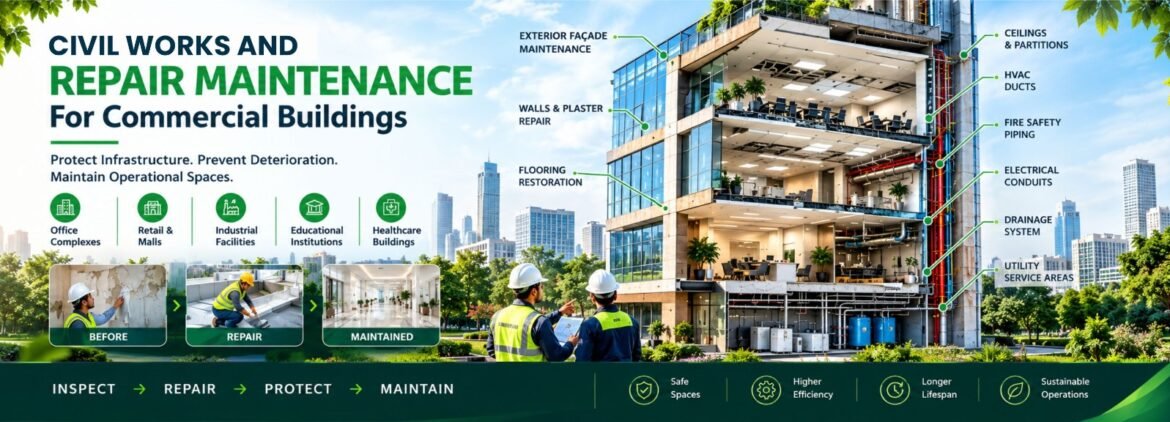
Commercial buildings require continuous repair and maintenance to remain safe, functional and presentable. Over time, walls, ceilings, floors, drainage systems, waterproofing, external surfaces and other building components can deteriorate because of regular use, weather exposure, moisture and ageing.
Professional civil works and repair maintenance helps facility managers address these issues before they become larger and more expensive problems. For offices, hospitals, hotels, malls, industrial facilities and other commercial properties, planned civil maintenance is an important part of overall facility management.
What Are Civil Works for Commercial Buildings?
Commercial civil works include construction, repair, modification, restoration and maintenance activities related to the physical structure and built environment of a property.
Depending on the building and its requirements, civil works may include:
- Wall and plaster repairs
- Flooring repairs and replacement
- Ceiling and partition work
- Waterproofing
- Leakage and seepage treatment
- Painting and surface finishing
- Masonry work
- Drainage-related repairs
- Concrete and structural surface repairs
- External building maintenance
- Renovation and modification work
- Rainwater harvesting infrastructure
The scope can range from minor corrective repairs to larger commercial renovation and improvement projects.
Why Is Civil Repair and Maintenance Important?
Ignoring minor building defects can allow them to develop into more significant maintenance problems. A small leakage, damaged surface or cracked finish may eventually affect larger areas if the underlying issue is not addressed.
Helps Prevent Costly Repairs
Regular inspection allows facility teams to identify deterioration at an early stage. Timely intervention can reduce the likelihood of extensive repair work.
Protects Building Infrastructure
Water infiltration, moisture and repeated physical stress can gradually affect building components. Proper maintenance helps protect the property from avoidable deterioration.
Improves Workplace Appearance
Walls, floors, ceilings and common areas directly influence the appearance of an office, hotel, retail property or commercial facility. Well-maintained interiors and exteriors create a more professional environment.
Supports Safety
Damaged flooring, loose surfaces, water leakage and deteriorating building components can create safety concerns. Prompt repair helps reduce these risks.
Common Civil Works and Repair Services
Commercial properties may require different types of civil maintenance depending on their age, construction and operating conditions.
Waterproofing and Leakage Repair
Waterproofing is an important component of commercial building maintenance. Roofs, basements, terraces, bathrooms, utility areas and other exposed locations may experience leakage or moisture-related problems.
Professional waterproofing should address the source of the problem rather than simply covering visible dampness.
Wall, Plaster and Masonry Repairs
Cracked plaster, damaged walls, loose surfaces and masonry deterioration can affect both appearance and building condition.
Repair work may include surface preparation, damaged material removal, patching, plastering and finishing.
Flooring Repairs
Commercial floors experience heavy daily traffic. Tiles, stone, vinyl, concrete and other flooring materials may become damaged or worn over time.
Repair or replacement should consider traffic levels, operational requirements and future maintenance.
Ceiling and Partition Works
Office layouts and business requirements often change. Ceiling and partition modifications may be required during renovations, expansion or workplace redesign.
Such work should be coordinated with electrical, HVAC, fire safety and other building services.
Preventive Civil Maintenance vs Reactive Repairs
Reactive maintenance takes place after a problem becomes visible or causes operational disruption. While emergency repairs will always be required in some situations, depending entirely on reactive maintenance can increase costs and downtime.
Preventive civil maintenance involves regular inspections and planned repairs before defects become major issues.
A commercial maintenance plan can include scheduled inspections of:
- Roofs and terraces
- Walls and external surfaces
- Floors and ceilings
- Drainage systems
- Waterproofing
- Common areas
- Utility spaces
- Parking and external areas
This approach helps facility managers prioritise repairs according to condition and risk.
Civil Works During Office Renovation
Office renovation often involves much more than furniture and decoration. Changes to layouts may require partitions, ceilings, flooring, electrical modifications, HVAC coordination and surface repairs.
Professional office civil works should therefore be planned alongside interior design and building services.
For example, relocating partitions may affect HVAC air distribution, fire safety systems, lighting and electrical points. Coordinating these requirements during planning can reduce rework and operational disruption.
Civil Maintenance for Different Commercial Properties
Offices and Corporate Buildings
Corporate properties may require flooring, painting, ceiling, partition, waterproofing and general repair services to maintain professional working environments.
Hospitals and Healthcare Facilities
Healthcare facilities require particularly organised maintenance because repair activities need to be coordinated carefully around daily operations, hygiene requirements and critical services.
Hotels and Hospitality Properties
Hotels experience continuous guest use and require regular maintenance of rooms, common areas, kitchens, service areas, flooring, ceilings and external infrastructure.
Malls and Retail Properties
Retail properties experience high footfall and require regular maintenance of public areas, flooring, ceilings, façades, drainage and other infrastructure.
Industrial and Commercial Facilities
Industrial properties may require specialised civil repairs, waterproofing, drainage improvements, flooring work and infrastructure maintenance depending on operational conditions.
How Civil Works Connect With Facility Maintenance
Civil maintenance should not be treated as a completely separate activity from other building services.
HVAC systems, fire safety, plumbing, electrical infrastructure, drainage and civil components often interact with each other.
For example, a ceiling repair may require coordination with HVAC ducts, electrical wiring and fire safety equipment. Similarly, waterproofing and drainage problems can affect equipment areas and building interiors.
An integrated commercial facility maintenance approach allows these requirements to be evaluated together.
How to Plan Commercial Civil Repair and Maintenance
A practical maintenance program should begin with a property inspection.
Facility teams can then classify identified issues into:
Immediate Repairs: Problems that create safety or operational risks.
Priority Repairs: Issues that may worsen if not addressed soon.
Planned Maintenance: Routine improvements that can be scheduled according to operational requirements.
Long-Term Projects: Larger renovation, waterproofing, structural or infrastructure improvements requiring detailed planning.
This classification helps businesses manage maintenance budgets while reducing unnecessary disruption.
Choosing a Commercial Civil Works Company
When selecting a commercial civil works and repair company, businesses should consider technical experience, workmanship, safety practices, project management and the ability to coordinate with other building services.
The right service provider should understand that commercial maintenance requires controlled execution. Work should be planned around the building’s operating schedule wherever possible.
For larger facilities, it is also beneficial to work with a provider capable of supporting HVAC, fire safety and other technical requirements alongside civil maintenance.
D-SOL Facilities: Civil Works and Integrated Facility Solutions
D-SOL Facilities provides civil works, repair and maintenance and integrated commercial facility solutions for offices, hospitals, hotels, malls, restaurants and other professional environments.
Its service capabilities include civil works, waterproofing and repair solutions, office interiors, design and build, HVAC duct cleaning, robotic HVAC duct cleaning, kitchen exhaust duct cleaning, laundry duct cleaning, AHU health audits, air balancing, indoor air quality audits, HVAC AMC and repair, fire safety solutions and rainwater harvesting.
D-SOL combines specialised technical teams, practical site-based solutions, safety-focused execution and commercial facility experience to help businesses maintain reliable and functional properties.
Contact D-SOL Facilities
For professional civil works, commercial building repair, preventive maintenance, office interiors and integrated facility solutions, contact D-SOL Facilities.
Phone: +91 84483 96120 | +91 84483 96121
Website: dsolfacilities.com
Regular civil inspection and timely repair can help commercial property owners protect their buildings, control maintenance costs and maintain a safe, professional and operational environment.