
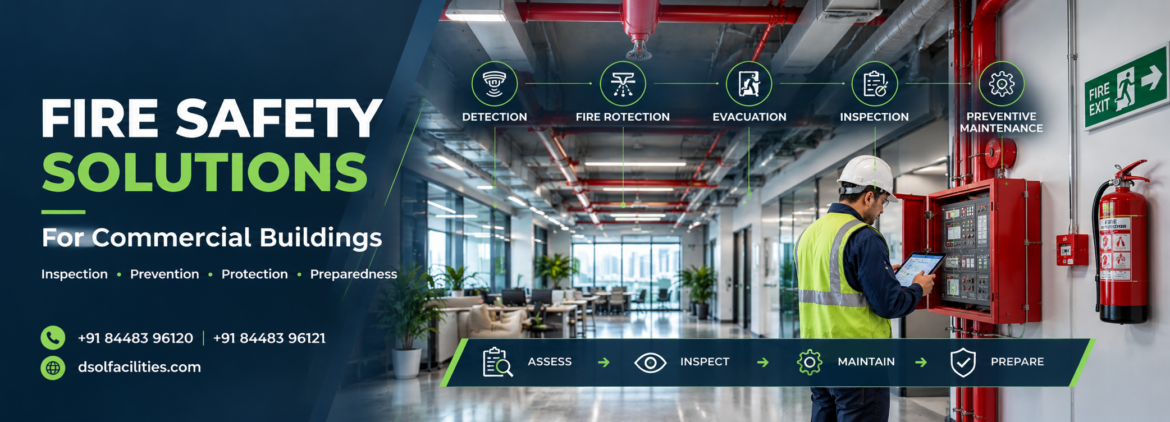
Fire safety is a critical part of commercial facility management. Offices, hospitals, hotels, malls, restaurants, warehouses, educational institutions and industrial facilities all face different fire risks depending on their building design, equipment, occupancy and daily operations.
A comprehensive fire safety solution for commercial buildings goes beyond installing fire extinguishers. It involves identifying potential hazards, maintaining fire-protection systems, ensuring safe evacuation routes and regularly inspecting critical building infrastructure.
For facility managers and business owners, a structured fire safety program can help reduce risks, support regulatory compliance and improve preparedness for emergency situations.
What Are Fire Safety Solutions for Commercial Buildings?
Commercial fire safety solutions are a combination of systems, inspections, maintenance practices and emergency preparedness measures designed to protect people, property and business operations from fire-related risks.
Depending on the facility, a fire safety program may include fire detection and alarm systems, firefighting equipment, emergency lighting, evacuation planning, fire-risk assessments, electrical safety checks, kitchen exhaust maintenance and periodic inspections.
The exact requirements depend on the building type, occupancy, layout and applicable local regulations.
Why Is Commercial Fire Safety Important?
Commercial buildings often contain electrical equipment, HVAC systems, kitchens, machinery, combustible materials and other potential ignition or fuel sources.
Helps Protect Employees and Visitors
The primary objective of fire safety is protecting people inside the building. Clearly defined emergency procedures, accessible evacuation routes and properly maintained fire-protection systems can improve preparedness.
Helps Protect Commercial Property
A fire can cause extensive damage to buildings, equipment, inventory and critical infrastructure. Preventive fire safety measures can help identify and address risks before they become serious incidents.
Supports Business Continuity
Fire-related incidents can disrupt business operations for days, weeks or longer. Preventive inspections and maintenance can reduce avoidable risks and support operational resilience.
Supports Compliance and Safety Management
Commercial facilities may be subject to various fire safety requirements depending on their location, building type and occupancy. A structured fire safety program helps businesses maintain appropriate documentation, inspections and maintenance practices.
Key Components of Commercial Fire Safety
A comprehensive fire safety management system may include several interconnected components.
Fire Detection and Alarm Systems
Early detection is essential for effective emergency response. Fire alarm and detection systems should be appropriately designed, regularly inspected and maintained.
Fire Extinguishers and Firefighting Equipment
Fire extinguishers and other firefighting equipment must be suitable for the types of fire risks present within different areas of a building.
Equipment should remain accessible, properly maintained and periodically inspected.
Emergency Lighting and Exit Signage
During a fire or power failure, occupants need clear guidance toward safe exits. Emergency lighting and visible exit signage form an important part of commercial evacuation planning.
Fire Evacuation Planning
A building should have clearly defined evacuation procedures, emergency exits and designated assembly areas. Staff should understand their responsibilities during an emergency.
Fire Safety Inspections
Regular inspections help identify issues such as blocked exits, damaged equipment, inadequate signage, electrical hazards or other conditions that may increase fire risk.
Kitchen Exhaust Duct Cleaning and Fire Safety
Commercial kitchens have specific fire risks because cooking processes can generate grease and oil deposits.
Over time, grease can accumulate inside kitchen exhaust ducts, hoods and associated ventilation systems. If these systems are not properly maintained, accumulated grease can contribute to fire risk.
Professional kitchen exhaust duct cleaning can therefore form an important part of a commercial kitchen’s fire-prevention and ventilation maintenance strategy.
Restaurants, hotels, hospitals, cloud kitchens, cafeterias and other commercial food-service facilities should include kitchen exhaust inspection and maintenance within their broader facility management plans.
HVAC Systems and Commercial Fire Safety
HVAC infrastructure can also form part of a building’s overall fire-safety strategy. Electrical components, motors, equipment rooms and ventilation systems require appropriate inspection and maintenance.
Regular HVAC maintenance can help identify mechanical or electrical issues that require attention.
In addition, keeping HVAC systems and associated areas properly maintained can support broader building safety and operational management.
Fire Risk Assessment for Commercial Buildings
A fire risk assessment involves identifying potential fire hazards, evaluating the likelihood and potential consequences of a fire, and determining appropriate preventive and protective measures.
A professional assessment may consider:
- Electrical installations
- Fire detection systems
- Firefighting equipment
- Emergency exits
- Evacuation routes
- Kitchen and exhaust systems
- HVAC equipment
- Storage of combustible materials
- Emergency lighting
- Fire doors and compartmentation
- Staff awareness and emergency procedures
The findings can help facility managers prioritise corrective actions.
Fire Safety for Different Commercial Facilities
Offices and Corporate Buildings
Office buildings may contain extensive electrical equipment, server rooms, kitchens, storage areas and large numbers of employees. Fire detection, evacuation planning and regular equipment inspection are particularly important.
Hospitals and Healthcare Facilities
Hospitals have complex layouts, specialised equipment, patients with varying mobility levels and continuous operations. Fire safety planning therefore requires careful coordination between building systems, staff and emergency procedures.
Hotels
Hotels operate around the clock and accommodate guests who may not be familiar with the building layout. Fire detection, emergency lighting, signage, evacuation procedures and equipment maintenance are essential components of hotel fire safety.
Malls and Retail Buildings
Shopping centres can experience high visitor volumes and contain restaurants, electrical systems, storage areas and multiple commercial units. Fire safety management must account for the building as well as individual occupancies.
Restaurants and Commercial Kitchens
Restaurants face additional risks associated with cooking equipment, LPG or electrical appliances, grease accumulation and exhaust systems. Regular kitchen exhaust cleaning and fire safety inspections are particularly important.
How Often Should Fire Safety Systems Be Inspected?
Fire safety maintenance frequency depends on the type of equipment, building use, applicable requirements and manufacturer recommendations.
Routine inspections should be combined with scheduled testing, servicing and documentation. Fire extinguishers, alarms, emergency lighting, evacuation systems and other equipment should not be left unattended until an emergency occurs.
Facility managers should maintain records of inspections, servicing and corrective actions to support systematic safety management.
How to Choose a Commercial Fire Safety Company
When selecting a commercial fire safety company, businesses should consider technical expertise, trained personnel, appropriate equipment and experience with commercial facilities.
The provider should ideally understand the relationship between fire safety and other building systems, including HVAC, kitchen exhaust, electrical infrastructure and general facility maintenance.
An integrated approach can make it easier to identify risks that may otherwise be overlooked when individual systems are assessed separately.
D-SOL Facilities: Commercial Fire Safety and Facility Solutions
D-SOL Facilities provides professional fire safety solutions for commercial buildings along with integrated facility and engineering services. Its capabilities include fire safety solutions, HVAC duct cleaning, robotic HVAC duct cleaning, kitchen exhaust duct cleaning, laundry duct cleaning, AHU health audits, air balancing, indoor air quality audits, HVAC AMC, repair and maintenance, civil works, office interiors, design and build, and rainwater harvesting.
With specialised technical teams, safety-focused execution, advanced inspection and cleaning technology, and experience across commercial facility requirements, D-SOL Facilities supports businesses in developing safer, better-maintained and more reliable working environments.
Contact D-SOL Facilities
For professional commercial fire safety solutions, fire-risk support, HVAC maintenance and facility services, contact D-SOL Facilities:
Phone: +91 84483 96120 | +91 84483 96121
Website: dsolfacilities.com
Effective fire safety is not a one-time activity. Regular assessment, preventive maintenance, staff preparedness and proper servicing of critical systems are essential for creating a safer commercial facility and protecting people, property and business continuity.