
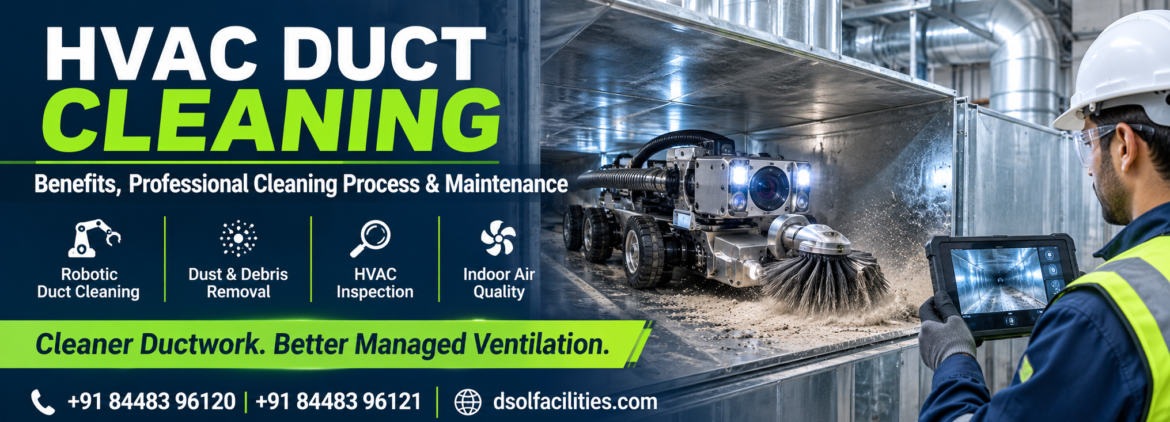
As air pollution becomes an increasing concern across Indian cities, maintaining clean and properly functioning ventilation systems has become an important responsibility for commercial and industrial buildings. From offices and hospitals to hotels, shopping malls and manufacturing facilities, indoor air quality directly influences the comfort of occupants and the working environment.
In cities such as Delhi, Gurugram, Chandigarh, Mumbai and Ahmedabad, outdoor air pollution, construction dust, vehicle emissions and industrial pollutants can create additional challenges for building ventilation systems. While air filtration and adequate ventilation are essential for managing indoor air quality, the condition of the HVAC ductwork also deserves attention.
Over time, dust, debris, moisture and other contaminants may accumulate inside air distribution systems. When neglected, this buildup can restrict airflow, affect system performance and create maintenance concerns. Professional HVAC duct cleaning helps building operators identify and address these problems through systematic inspection and appropriate cleaning methods.
What Is HVAC Duct Cleaning?
HVAC duct cleaning is the process of inspecting and removing accumulated dust, debris and other unwanted materials from the ductwork and associated components of heating, ventilation and air conditioning systems.
Commercial HVAC systems distribute conditioned air through an interconnected network of supply ducts, return ducts, air handling units, filters, grilles and diffusers. These components work together to maintain indoor temperature and circulate air throughout different areas of a building.
When dust accumulation, construction debris or moisture-related contamination develops inside the system, it may affect airflow and the overall condition of the ventilation network.
Professional commercial HVAC duct cleaning involves identifying the affected areas, selecting appropriate cleaning equipment and removing contaminants without damaging duct surfaces or connected mechanical components.
Why Is HVAC Duct Cleaning Important for Commercial Buildings?
1. Supporting Better Indoor Air Quality
Indoor air quality has become an important consideration for businesses, particularly as concerns about air pollution and particulate matter continue to grow.
Fine particles such as PM2.5 and PM10 can enter buildings through outdoor air intakes, doors, windows and other openings. Indoor activities, cleaning chemicals, construction work and manufacturing processes may introduce additional pollutants.
An HVAC system that is poorly maintained can contribute to indoor air quality problems through contaminated filters, moisture accumulation, inadequate ventilation or dirty system components.
Cleaning contaminated ductwork when necessary, maintaining suitable filtration and ensuring proper ventilation can support a more effectively managed indoor environment.
2. Maintaining Proper Airflow and HVAC Performance
Dust accumulation, blocked filters and debris around ventilation components can interfere with air movement.
In commercial buildings, uneven airflow may result in certain rooms receiving insufficient conditioned air, while other areas experience inconsistent temperatures.
Professional HVAC inspection and cleaning can help identify restrictions and address contamination that may be affecting airflow. This supports the intended operation of the ventilation system and helps facility teams identify additional mechanical issues.
3. Addressing Dust and Moisture Accumulation
Moisture inside HVAC systems requires particular attention. Condensation, leaking drain lines, poorly maintained cooling coils and water intrusion can create conditions favourable to microbial growth.
If moisture-related contamination is found inside ductwork, simply removing visible dust may not resolve the underlying problem. The source of moisture must also be identified and corrected.
A comprehensive maintenance approach helps reduce the likelihood of recurring contamination and unnecessary repair work.
4. Supporting a Cleaner Commercial Working Environment
Offices, hospitals, hotels, retail spaces and factories depend on properly maintained ventilation systems.
Excessive dust around air outlets, unpleasant odours and inconsistent airflow can create complaints among building occupants and increase maintenance requirements.
An inspection-based HVAC duct cleaning programme helps facility managers address these concerns while maintaining better control over building maintenance activities.
When Should Commercial HVAC Ducts Be Cleaned?
HVAC duct cleaning should be based on the actual condition of the system rather than an arbitrary schedule.
Building owners and facility managers should consider professional inspection when they notice:
- Visible dust or debris accumulating around supply and return air outlets.
- Persistent dust accumulation inside accessible duct sections.
- Evidence of water damage or moisture-related contamination.
- Construction or renovation debris entering the ventilation system.
- Pest activity or unwanted material inside ductwork.
- Restricted airflow that may be associated with contamination.
- Repeated complaints about unusual odours or ventilation conditions.
Regular filter replacement, coil maintenance and inspection of condensate drainage remain essential. However, these activities do not automatically mean that the entire duct network needs cleaning.
Professional HVAC Duct Cleaning Process
Effective HVAC duct cleaning requires a systematic approach that protects equipment, controls dust movement and ensures that the work is properly documented.
Step 1: HVAC System Inspection
The process begins with an assessment of the ventilation system, including accessible duct sections, filters, air handling units, grilles and diffusers.
The inspection helps identify contamination, moisture concerns, damaged insulation and areas requiring attention. Photographic documentation may be used to record the initial condition.
Step 2: Preparation and System Isolation
Before cleaning begins, the relevant HVAC equipment is safely isolated according to the maintenance procedure.
Work areas are protected, access points are identified and suitable arrangements are made to prevent loosened dust from entering occupied spaces.
Step 3: Mechanical Cleaning and Dust Removal
Specialised brushes, agitation equipment and suitable vacuum collection systems are used to remove accumulated debris from accessible duct surfaces.
Negative-pressure collection equipment with appropriate filtration helps capture loosened contaminants rather than allowing them to spread into surrounding areas.
Step 4: Cleaning Associated Components
Depending on the inspection findings and agreed scope, the service may include cleaning accessible grilles, diffusers, air handling unit sections, fan housings and other relevant components.
Filters, cooling coils and condensate drain pans should also be inspected and maintained according to equipment requirements.
Step 5: Final Inspection and Documentation
After cleaning, the affected sections are inspected to assess the results. Access openings are properly closed and sealed, and any identified maintenance concerns are documented.
The HVAC system is then recommissioned according to the applicable safety and operating procedures.
How to Maintain Clean HVAC Ducts After Cleaning
Cleaning is only one part of effective HVAC maintenance. Preventive measures help reduce future contamination and protect system performance.
Replace air filters regularly: Follow manufacturer recommendations and inspect filters more frequently in buildings exposed to heavy dust or outdoor pollution.
Maintain AHUs and cooling coils: Schedule inspections to identify dirt accumulation, damaged components and drainage problems.
Control moisture: Check condensate trays, drain lines, insulation and potential water leakage to prevent persistent dampness.
Protect outdoor air intakes: Keep air intake areas away from avoidable dust sources, exhaust outlets and construction-related contamination wherever possible.
Maintain ventilation systems: Check airflow, ventilation rates and system operation to ensure that occupied areas receive appropriate air circulation.
Schedule professional inspections: Maintain service records and arrange cleaning when inspections identify conditions that justify intervention.
HVAC Duct Cleaning and Air Pollution: Why Businesses Should Pay Attention
With increasing concern about air pollution in Indian cities, commercial buildings need a broader approach to indoor air quality management.
Outdoor pollution does not stop at the building entrance. Fine particulate matter can enter through ventilation systems and other openings, making filtration, ventilation management and regular HVAC maintenance increasingly important.
However, duct cleaning alone cannot eliminate PM2.5, PM10 or other airborne pollutants. Effective indoor air quality management also requires appropriate air filtration, adequate fresh-air ventilation, source control and periodic air quality assessment.
For facility managers, combining HVAC maintenance with indoor air quality audits provides a more complete understanding of building ventilation performance and potential contamination sources.
Conclusion
A properly maintained HVAC system is essential for commercial buildings that depend on reliable ventilation, comfortable indoor temperatures and controlled indoor environmental conditions. Professional HVAC duct cleaning helps address accumulated contamination, identify maintenance concerns and support the effective operation of air distribution systems.
Rather than relying on routine cleaning without assessment, businesses should adopt an inspection-based maintenance strategy that considers duct condition, filtration, moisture control and ventilation performance.
D-SOL Facilities provides specialised commercial and industrial facility management solutions, including robotic HVAC duct cleaning, AC duct cleaning, kitchen exhaust and laundry duct cleaning, AHU health audits, air balancing, indoor air quality audits, HVAC AMC, fire safety, civil works and building maintenance. With a focus on systematic inspections, specialised cleaning equipment and professional service execution, the company supports businesses in maintaining cleaner, safer and more efficiently managed commercial environments.
Contact D-SOL Facilities
For commercial and industrial HVAC duct cleaning, inspection and maintenance requirements, connect with the D-SOL Facilities team.
Call for service enquiries: +91 84483 96120 | +91 84483 96121
Email: tanmay@dsolfacilities.com
Website: https://dsolfacilities.com/
Service areas: Gurugram, Delhi NCR, Chandigarh, Ludhiana, Mumbai, Pune, Ahmedabad, Bangalore and other major Indian commercial and industrial locations.