
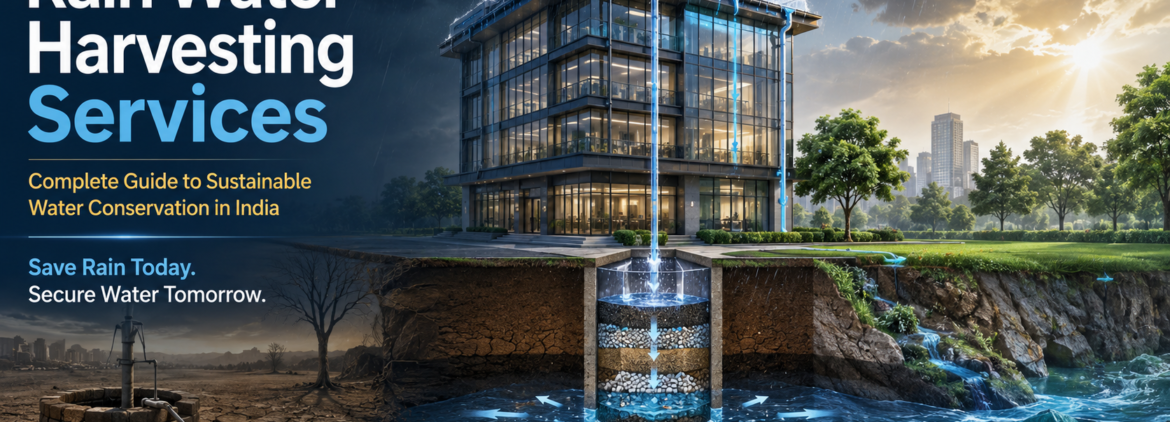
Understanding India’s Water Crisis and the Urgent Need for Rainwater Harvesting
India stands at a critical juncture in its water management journey. Home to over 18% of the global population, the country possesses merely 4% of the world’s fresh water resources, creating a profound imbalance that threatens agricultural productivity, urban sustainability, and rural livelihoods. Groundwater, which serves as the primary source of irrigation for over 90% of farmers in arid regions, continues to decline at an alarming rate due to over-extraction and insufficient recharge. The consequences are palpable dwindling water tables, saline intrusion, rising fluoride levels, and a steady erosion of the social fabric as water scarcity forces migration and disrupts education.
Rainwater harvesting (RWH) has emerged as one of the most scalable and effective solutions to this escalating crisis. This ancient practice, refined over millennia from the Harappan civilization’s sophisticated stepped tanks at Dholavira to contemporary engineered recharge systems, offers a pathway to water security that is both environmentally sound and economically viable. Simple structures such as check dams, aquashafts, and recharge ponds can improve groundwater levels by 10 to 15 per cent within just two monsoon seasons, demonstrating the remarkable efficacy of well-designed harvesting interventions.
Government Policies and National Initiatives Driving Rainwater Harvesting in India
The Government of India has placed unprecedented emphasis on rainwater harvesting and groundwater recharge through a suite of policy measures and nationwide campaigns. The Ministry of Jal Shakti has been implementing the Jal Shakti Abhiyan (JSA) since 2019, with JSA 2025 currently underway with special focus on over-exploited and critical districts across the country. Under this umbrella campaign, various groundwater recharge and conservation works are being undertaken through convergence with central and state schemes.
The Jal Sanchay Jan Bhagidari (JSJB) initiative, launched by the Hon’ble Prime Minister with the vision of making rainwater harvesting a mass movement, represents a paradigm shift in water conservation approach. By promoting community ownership and responsibility, the initiative seeks to develop cost-effective, local solutions tailored to specific water challenges across diverse regions. As of November 2025, over 1.65 lakh water structures had been completed in Uttar Pradesh alone under this initiative.
The Central Ground Water Board (CGWB) continues to implement the Ground Water Management and Regulation Scheme, providing technical guidance through comprehensive manuals on artificial recharge and rooftop rainwater harvesting. The Model Building Bye-Laws, 2016, formulated by the Ministry of Housing and Urban Affairs, mandate rainwater harvesting for all buildings with plot sizes of 100 square metres or more, with 35 States and Union Territories having adopted these provisions.
In a landmark decision, the Ministry of Rural Development amended Schedule-I of the Mahatma Gandhi National Rural Employment Guarantee Act (MGNREGA), mandating minimum expenditure on water conservation works based on groundwater stress levels. Over-exploited and critical blocks must now allocate 65 per cent of NREGS funds to water-related works, while semi-critical blocks have a 40 per cent mandate and safe blocks a minimum of 30 per cent. This policy intervention is expected to make available approximately ₹35,000 crore for water-related works under the scheme.
Rainwater Harvesting Techniques and Methods for Indian Conditions
Rainwater harvesting encompasses a diverse array of techniques designed to capture, store, and utilise rainwater for various purposes. The Central Ground Water Board defines rainwater harvesting as the technique of collection and storage of rainwater at surface or in sub-surface aquifers before it is lost as surface run-off. The augmented resource can then be harvested when needed, creating a reliable buffer against water scarcity.
Rooftop Rainwater Harvesting represents the most accessible and widely adopted method, particularly suitable for urban habitations. This system captures rainwater from building rooftops, channels it through conveyance pipes, and directs it either into storage tanks for direct use or into recharge structures for groundwater replenishment. Studies have demonstrated the remarkable potential of rooftop harvesting in Hyderabad, for instance, rooftop rainwater harvesting can meet up to 32.75 per cent of total domestic basic water demand and 29.47 per cent of standard urban water demand, with an annual availability of 141.21 billion litres.
Groundwater Recharge Structures form the backbone of artificial recharge initiatives across India. These include percolation tanks, recharge pits, injection wells, recharge shafts, and check dams. In Raipur, the capital city of Chhattisgarh, nearly 32,000 rainwater harvesting and groundwater recharge structures were created during 2025 alone, including recharge wells, percolation pits, injection wells, recharge shafts, rooftop harvesting systems, and stormwater recharge structures. Recharge wells in the city can replenish up to three lakh litres annually, while injection well systems in groundwater-stressed zones can recharge up to fifteen lakh litres every year.
Large-Scale Infrastructure Integration has emerged as an innovative approach to rainwater harvesting. The Namo Bharat corridor, spanning 82 kilometres from Delhi to Meerut, now hosts approximately 900 rainwater harvesting pits integrated beneath the viaduct span. Each station pit measures 2 metres in diameter and 2.5 metres in depth with a capacity of approximately 6,500 litres, while viaduct pits are larger, capable of storing up to 8,700 litres. These structures are projected to conserve over 70 lakh litres of water annually, addressing both urban flooding and depleting aquifers across the National Capital Region.
Benefits of Rainwater Harvesting for Water Conservation and Sustainability
The benefits of rainwater harvesting extend far beyond mere water collection, encompassing environmental, economic, and social dimensions that collectively contribute to sustainable development.
Groundwater Recharge and Augmentation stands as the primary benefit of rainwater harvesting. Artificial recharge of aquifers is regarded as a fundamental supply-side strategy in India to address the prevalent issue of groundwater over-exploitation. Research reveals that up to 80 per cent of the non-monsoon groundwater extraction within 500 metres of a water harvesting tank can be contributed by recharge, underscoring the profound impact of these structures on local water tables.
Economic Viability and Cost Savings make rainwater harvesting an attractive investment. Basic rainwater harvesting structures can be installed at costs starting around ₹25,000, with investments typically recovered within approximately three years. Harvested rainwater can meet non-potable demands throughout the monsoon season, leading to noticeable reductions in water bills and electricity consumption. A gravity-fed rooftop rainwater harvesting system using plastic tanks and PVC pipes offers a sustainable and cost-effective solution for urban households.
Urban Flood Mitigation represents a critical co-benefit of rainwater harvesting. By capturing and diverting excess rainwater, harvesting systems help address recurring waterlogging in urban areas. The widespread installation of rooftop rainwater harvesting systems on institutional, commercial, and residential buildings can considerably reduce the risk of waterlogging in flood-prone areas while simultaneously addressing water scarcity.
Climate Resilience and Adaptation is enhanced through rainwater harvesting. Adequately stored rainwater supports sustainability, minimises flood risks, improves local drainage, and enhances water security in water-scarce areas. The practice reduces dependence on overburdened municipal systems, replenishes groundwater, and enhances resilience against climate variability.
Components of a Rainwater Harvesting System
A comprehensive rainwater harvesting system comprises several essential components that work in concert to ensure efficient collection, filtration, and storage or recharge of rainwater.
Catchment Area serves as the surface from which rainwater is collected. This can be a rooftop, paved area, or any impervious surface that facilitates runoff collection. The size and material of the catchment area significantly influence the quantity and quality of harvested water.
Conveyance System consists of gutters, downspouts, and pipes that transport rainwater from the catchment area to the filtration and storage or recharge components. Regular cleaning of gutters and downpipes is essential to remove leaves, bird droppings, and debris that can impede water flow.
First Flush Mechanism is a crucial component that diverts the initial rainfall away from the storage system. This first flush carries accumulated dust, dirt, and contaminants from the catchment surface, preventing them from entering the storage or recharge system. The first flush device is one of the most important yet often ignored components of a rainwater harvesting system.
Filtration System removes suspended particles and impurities from the harvested rainwater. Filters typically employ layers of gravel, sand, and charcoal to screen out particles larger than 200 microns. The filter system requires regular maintenance, with components needing washing every three months to prevent clogging.
Storage or Recharge System constitutes the final destination of harvested rainwater. Storage tanks, either above ground or below ground, hold water for direct use, while recharge structures such as pits, wells, and shafts facilitate groundwater replenishment.
Maintenance and Monitoring of Rainwater Harvesting Structures
Regular maintenance is essential to ensure the longevity and effectiveness of rainwater harvesting systems. A systematic approach to maintenance encompasses pre-monsoon preparation, routine cleaning, and periodic inspections.
Pre-Monsoon Preparation involves cleaning roof catchments, removing algae from roof tiles and asbestos sheets, draining and cleaning storage tanks thoroughly, and clearing water channels and gutters before the first monsoon rain. Tree branches that overhang roofs should be trimmed to prevent debris accumulation.
Routine Maintenance includes regular cleaning of gutters and downpipes to remove leaves and debris, inspecting storage tanks for leaks or cracks every six months, and ensuring first flush devices and filtration systems are functioning properly. The surroundings of recharge structures should be kept clean and hygienic to prevent contamination.
Monitoring and Evaluation involves periodic assessment of system performance, including water quality testing and measurement of recharge effectiveness. The Central Ground Water Board provides comprehensive guidelines for the construction, operation, and maintenance of rainwater harvesting structures through its manuals and technical publications.
Rainwater Harvesting Services: Professional Solutions for Sustainable Water Management
Professional rainwater harvesting services have emerged as essential partners in India’s water conservation journey, offering end-to-end solutions that encompass design, installation, and maintenance of harvesting systems. These services cater to diverse clientele, including residential complexes, commercial establishments, educational institutions, healthcare facilities, and industrial units.
Expert service providers conduct comprehensive site assessments to evaluate catchment potential, soil permeability, and groundwater conditions, enabling the design of customised systems that optimise water capture and recharge. Advanced rainwater harvesting solutions incorporate modular systems, pre-fabricated polymer-based blocks, and patented filtration technologies that enhance efficiency while reducing installation time and maintenance requirements.
Professional services also ensure compliance with regulatory requirements, including mandatory rainwater harvesting provisions under Model Building Bye-Laws and state-specific regulations. With the growing recognition of rainwater harvesting as a critical component of urban water security, professional service providers play an increasingly vital role in helping individuals, businesses, and institutions contribute to India’s sustainable water future.
About D-SOL Facilities
D-SOL Facilities stands as a comprehensive facility management and environmental solutions provider, delivering specialised rainwater harvesting services across India. The company’s expertise encompasses advanced rainwater harvesting system design, installation, and maintenance for hospitals, educational institutions, commercial buildings, and industrial facilities. D-SOL Facilities is committed to providing state-of-the-art rainwater harvesting solutions that help individuals and businesses reduce their dependency on municipal water supplies while promoting environmental sustainability.
The company’s USP lies in its integrated approach to water conservation, combining technical expertise with a deep understanding of local hydrogeological conditions to deliver customised solutions that maximise water capture and recharge efficiency. With a commitment to excellence, innovation, and sustainability, D-SOL Facilities enables clients to harvest, store, and utilise rainwater effectively, contributing to a greener and more water-secure future. The company’s comprehensive services span the entire project lifecycle from initial assessment and system design through installation, commissioning, and ongoing maintenance ensuring that rainwater harvesting systems deliver optimal performance and long-term reliability.
Contact Us
Call for reservation: +91 84483 96120 | +91 84483 96121
Email: rohit@dsolfacilities.com | hemraj@dsolfacilities.com