
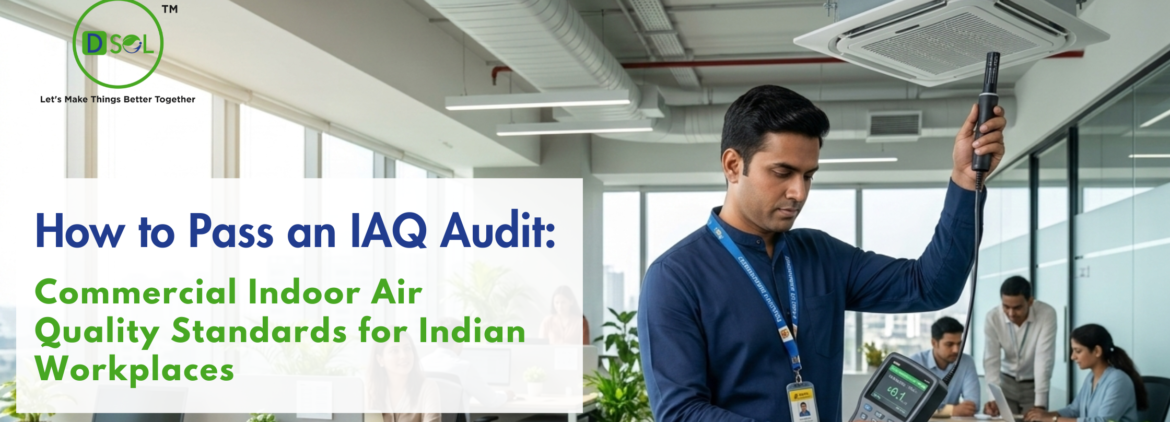
Indoor air quality has become a critical concern for modern workplaces. As businesses focus on employee health, regulatory compliance, and sustainable operations, Indoor Air Quality (IAQ) audits are increasingly becoming an essential part of facility management in commercial buildings across India. Poor indoor air quality can affect employee productivity, increase absenteeism, and create long-term health concerns. For organizations operating in offices, malls, hospitals, and commercial complexes, maintaining healthy air environments is not only a regulatory responsibility but also a strategic investment in workplace well-being.
Passing an IAQ audit for commercial workplaces requires careful planning, proper infrastructure, and continuous monitoring of indoor environmental conditions. Understanding the standards, common challenges, and practical solutions can help organizations maintain compliance while ensuring a healthier environment for employees and visitors.
Understanding Indoor Air Quality in Commercial Buildings
Indoor Air Quality refers to the condition of air within buildings and how it affects the health and comfort of occupants. In commercial workplaces, indoor air quality depends on multiple factors such as ventilation systems, air filtration efficiency, humidity levels, temperature control, and the presence of airborne pollutants.
Modern office environments rely heavily on centralized air-conditioning systems and sealed building structures. While these systems improve temperature control and energy efficiency, they can also trap pollutants if ventilation and filtration systems are not properly maintained.
An IAQ audit evaluates these environmental factors to ensure that air quality meets acceptable health and safety standards. The audit process typically involves inspection of HVAC systems, measurement of airborne particles, and evaluation of carbon dioxide levels, humidity, and microbial contamination.
Why IAQ Audits Are Essential for Indian Workplaces
The importance of indoor air quality has increased significantly in India due to urban pollution, high occupancy density in commercial buildings, and rising awareness about workplace health standards. Many organizations now include IAQ compliance as part of their Environmental, Health, and Safety (EHS) policies.
A properly conducted IAQ audit provides several benefits:
Improved employee health and productivity
Reduced risk of respiratory illnesses and allergies
Better compliance with workplace safety regulations
Enhanced reputation for corporate responsibility
Improved energy efficiency of HVAC systems
Organizations that maintain high indoor air quality standards also experience greater employee satisfaction and improved workplace performance.
Key Indoor Air Quality Standards for Commercial Workplaces
To pass an IAQ audit successfully, businesses must ensure that their indoor environments meet established air quality benchmarks. These standards are generally measured through a series of environmental parameters.
Carbon Dioxide Levels
Carbon dioxide concentration is a key indicator of ventilation efficiency. Elevated CO₂ levels suggest inadequate fresh air circulation, which can lead to fatigue, headaches, and reduced concentration among employees.
Maintaining balanced ventilation systems and fresh air supply helps keep carbon dioxide levels within acceptable limits.
Particulate Matter (PM2.5 and PM10)
Particulate matter consists of tiny airborne particles that can enter indoor environments through ventilation systems or external pollution. High levels of PM2.5 and PM10 are associated with respiratory problems and reduced air quality.
Efficient air filtration systems and high-performance filters are essential to reduce particulate contamination.
Temperature and Humidity Balance
Thermal comfort plays a vital role in indoor air quality. Excessive humidity can promote microbial growth, while extremely dry air can cause respiratory irritation.
Maintaining balanced temperature and humidity levels improves employee comfort and reduces the risk of biological contamination.
Volatile Organic Compounds (VOCs)
VOCs are chemical pollutants released from furniture, carpets, cleaning agents, and building materials. High concentrations of these compounds can cause headaches, dizziness, and irritation of the eyes and respiratory system.
Using low-emission materials and proper ventilation helps control VOC levels in commercial buildings.
Microbial Contamination
Microbial growth such as bacteria and mold can develop in damp areas of air-conditioning systems, ducts, and poorly maintained spaces. IAQ audits often include microbial testing to identify contamination risks.
Routine cleaning and disinfection of HVAC systems play a key role in preventing microbial growth.
Preparing Your Workplace for an IAQ Audit
Organizations that plan proactively for IAQ audits are more likely to achieve successful results. Facility managers should begin by reviewing the condition of ventilation and air-conditioning systems.
Conduct Preventive HVAC Maintenance
Regular maintenance of HVAC systems is the foundation of good indoor air quality. This includes cleaning air ducts, replacing filters, and ensuring that fresh air intake systems are functioning properly.
Preventive maintenance also improves energy efficiency and reduces operational costs.
Monitor Indoor Environmental Parameters
Continuous monitoring of indoor air quality parameters allows facility managers to detect issues early. Installing sensors that track CO₂ levels, humidity, and temperature helps maintain optimal indoor conditions.
Data collected from these systems can also serve as evidence during an IAQ audit.
Maintain Proper Air Filtration Systems
Air filtration systems must be designed to remove fine particulate matter and airborne contaminants. High-efficiency filters improve air purity and reduce exposure to pollutants.
Replacing filters at recommended intervals is essential to ensure consistent performance.
Ensure Adequate Ventilation
Ventilation systems must supply sufficient fresh air to dilute indoor pollutants. Proper airflow design helps maintain balanced indoor air quality across different areas of the workplace.
Regular inspection of ventilation ducts and air handling units is necessary to maintain airflow efficiency.
Implement Safe Cleaning Practices
Cleaning chemicals and disinfectants can release volatile compounds that affect air quality. Using environmentally friendly cleaning products and ensuring proper ventilation during cleaning activities can help maintain healthier indoor environments.
Common Reasons Businesses Fail IAQ Audits
Despite good intentions, many commercial facilities fail IAQ audits due to operational gaps or inadequate maintenance practices. Some of the most common issues include:
Neglected HVAC maintenance and clogged air filters
Poor ventilation design leading to stagnant air circulation
Excessive indoor humidity and microbial growth
Use of high-emission materials and cleaning chemicals
Lack of regular air quality monitoring systems
Addressing these issues through preventive facility management practices significantly improves the chances of passing an IAQ audit.
The Role of Professional IAQ Assessment and Solutions
Conducting a comprehensive IAQ audit requires technical expertise, specialized equipment, and a systematic evaluation process. Professional facility management companies play a crucial role in helping organizations assess indoor environments and implement corrective solutions.
From air quality monitoring to HVAC system optimization, professional IAQ services ensure that commercial buildings meet health and compliance standards.
These services often include air quality testing, microbial assessments, filtration system evaluation, ventilation improvement strategies, and ongoing monitoring solutions that help organizations maintain optimal indoor conditions.
Building Healthier Workplaces Through IAQ Compliance
Maintaining high indoor air quality standards is not merely about passing an audit. It is about creating workplaces where employees can perform at their best without being exposed to harmful environmental conditions.
Organizations that prioritize indoor air quality benefit from healthier employees, improved productivity, and stronger corporate credibility. As awareness around environmental health continues to grow in India, IAQ compliance will remain an important element of responsible facility management.
Investing in preventive measures today ensures that businesses remain prepared for future health and environmental standards.
About D-SOL Facilities – IAQ Audit and Facility Management Solutions
D-SOL Facilities is a professional facility management and environmental solutions provider offering specialized services for commercial buildings, corporate offices, hospitals, and industrial facilities. The company provides comprehensive IAQ audit and improvement solutions designed to help organizations maintain healthy indoor environments and comply with workplace air quality standards.
With a strong focus on technical expertise and preventive facility management, D-SOL Facilities offers services including IAQ testing, HVAC system evaluation, ventilation optimization, microbial air analysis, air filtration solutions, and indoor environmental monitoring. Their approach combines advanced assessment tools with practical implementation strategies to ensure long-term air quality improvement.
By delivering reliable and efficient IAQ solutions, D-SOL Facilities supports organizations in creating safer, healthier, and more productive work environments.Contact Us
Call for reservation: +91 84483 96120 | +91 8448396121
Email: rohit@dsolfacilities.com | hemraj@dsolfacilities.com