
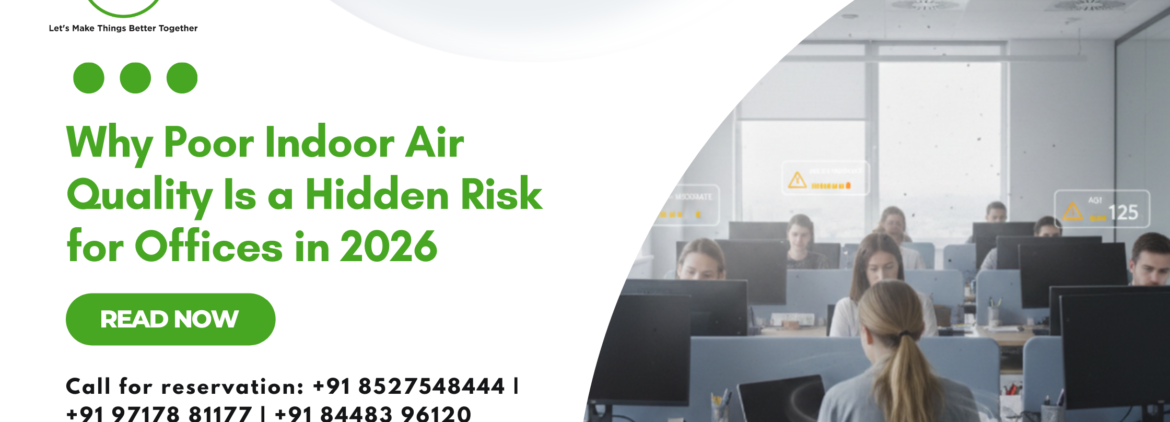
In 2026, the modern workplace is defined by flexibility, technology integration, and a renewed focus on employee well-being. Organizations invest heavily in ergonomic furniture, digital infrastructure, and collaborative spaces to improve productivity and retention. Yet, one critical factor often remains overlooked: indoor air quality (IAQ). Poor indoor air quality has emerged as a silent threat undermining health, productivity, compliance, and long-term operational efficiency in offices across sectors.
As offices become more airtight to improve energy efficiency and accommodate advanced HVAC systems, the quality of air circulating indoors has become a decisive factor in workplace performance. This article explores why poor indoor air quality is a hidden risk for offices in 2026, the business consequences of ignoring it, and the strategic approaches organizations are adopting to mitigate this growing challenge.
Understanding Indoor Air Quality in Modern Offices
Indoor air quality refers to the condition of air within and around buildings, particularly as it affects the health and comfort of occupants. In office environments, IAQ is influenced by multiple factors, including ventilation effectiveness, HVAC maintenance, building materials, occupant density, and external pollution levels.
In 2026, offices rely heavily on centralized HVAC systems to regulate temperature and airflow. While these systems are essential for comfort, they can also become conduits for pollutants if not properly maintained. Dust, allergens, microbial contaminants, volatile organic compounds (VOCs), and fine particulate matter can accumulate within ducts and indoor spaces, circulating continuously throughout the workplace.
The Rising Complexity of Office Environments
The post-pandemic workplace has evolved into a hybrid ecosystem. Offices now host fluctuating occupancy levels, shared workstations, collaboration zones, and enclosed meeting rooms equipped with advanced technology. These changes have increased the complexity of managing indoor air quality.
Key contributors to poor IAQ in offices include:
- High occupant density during peak hours
- Inadequate fresh air intake
- Poorly maintained HVAC ducts and filters
- Emissions from office furniture, carpets, and cleaning agents
- External air pollution infiltrating indoor spaces
As a result, air quality can deteriorate gradually, often without visible warning signs.
Health Impacts: The Invisible Cost of Poor Indoor Air Quality
One of the most significant risks of poor indoor air quality is its impact on employee health. Unlike visible hazards, air quality issues often go unnoticed until symptoms become persistent.
Short-Term Health Effects
Employees exposed to polluted indoor air may experience headaches, eye irritation, fatigue, dizziness, and respiratory discomfort. These symptoms are frequently dismissed as stress or seasonal illness, masking the underlying cause.
Long-Term Health Risks
Prolonged exposure to poor IAQ increases the risk of chronic respiratory conditions, allergies, asthma aggravation, and cardiovascular stress. In 2026, as awareness of occupational health grows, organizations are increasingly held accountable for maintaining safe indoor environments.
Productivity Loss: The Business Impact Few Measure
Beyond health concerns, poor indoor air quality directly affects productivity. Studies consistently show that inadequate ventilation and high pollutant levels impair cognitive performance, decision-making, and concentration.
In office settings, even a marginal decline in cognitive efficiency can translate into significant productivity losses over time. Employees working in poorly ventilated spaces are more likely to experience mental fatigue, reduced alertness, and lower engagement levels. In competitive business environments, this hidden drain on performance can impact profitability and innovation.
Energy Efficiency and Air Quality: A Delicate Balance
In the pursuit of energy efficiency, many offices in 2026 are designed to be tightly sealed, minimizing air leakage and reducing energy consumption. While this approach lowers operational costs, it also increases reliance on HVAC systems to maintain air freshness.
Without regular maintenance, HVAC ducts and filters become reservoirs for contaminants, reducing airflow efficiency and increasing energy consumption. Systems must work harder to circulate air, leading to higher electricity usage and accelerated equipment wear. Ironically, neglecting indoor air quality can undermine the very energy efficiency goals organizations aim to achieve.
Compliance, Reputation, and Risk Management
Regulatory scrutiny around workplace safety and environmental standards is intensifying. In 2026, organizations are expected to demonstrate proactive measures to ensure healthy indoor environments.
Poor indoor air quality poses several compliance and reputational risks:
- Increased absenteeism and employee complaints
- Potential regulatory penalties for non-compliance
- Difficulty attracting and retaining talent
- Negative brand perception among clients and stakeholders
Forward-thinking organizations recognize that indoor air quality is not just a facilities issue it is a governance and risk management concern.
Why Poor Indoor Air Quality Often Goes Unnoticed
Despite its impact, indoor air quality remains a hidden risk for many offices. This is largely due to:
- Lack of real-time air quality monitoring
- Absence of visible indicators of contamination
- Misconception that HVAC systems automatically ensure clean air
- Reactive maintenance approaches instead of preventive strategies
Without data-driven insights, decision-makers may underestimate the severity of IAQ issues until they manifest as operational disruptions or health concerns.
The Shift Toward Proactive Indoor Air Quality Management
In 2026, organizations are moving from reactive responses to proactive indoor air quality management. This shift is driven by advancements in technology and a growing understanding of the link between air quality, productivity, and sustainability.
Key elements of modern IAQ management include:
- Regular inspection and cleaning of HVAC ducts
- High-efficiency filtration and timely filter replacement
- Continuous air quality monitoring using smart sensors
- Preventive maintenance strategies aligned with occupancy patterns
- Integration of IAQ data into facility management systems
By adopting these practices, offices can identify risks early and maintain consistent air quality standards.
Strategic Facility Management as a Solution
Managing indoor air quality effectively requires expertise, planning, and execution. Professional facility management services play a critical role in diagnosing air quality issues, implementing corrective measures, and ensuring long-term compliance.
Through structured audits, advanced cleaning techniques, and data-backed maintenance plans, facility specialists help organizations transform indoor air quality from a hidden risk into a strategic advantage.
Organizations seeking expert guidance can reach out for professional support by calling +91 8527548444 | +91 97178 81177 | +91 84483 96120 or emailing rohit@dsolfacilities.com | hemraj@dsolfacilities.com for consultations tailored to office environments.
The Strategic Importance of Indoor Air Quality in 2026
As offices continue to evolve, indoor air quality has become a defining factor in workplace success. Healthy air supports employee well-being, enhances productivity, reduces operational costs, and strengthens organizational reputation.
Ignoring indoor air quality is no longer an option. In 2026, it represents a hidden risk with tangible consequences one that demands attention, investment, and strategic management.
About the Company: Services and Unique Value Proposition
D-SOL Facilities is a professional facility management and HVAC solutions provider specializing in improving indoor air quality and operational efficiency for commercial spaces. The company offers comprehensive services including HVAC duct cleaning, indoor air quality audits, ventilation system maintenance, energy efficiency optimization, and integrated facility management solutions.
What distinguishes D-SOL Facilities is its preventive, technology-driven approach. By combining advanced equipment, trained professionals, and structured maintenance protocols, the company helps organizations identify hidden air quality risks and address them before they impact health or productivity. Their commitment to safety, compliance, and performance makes them a trusted partner for offices seeking healthier, more efficient indoor environments in 2026 and beyond.