
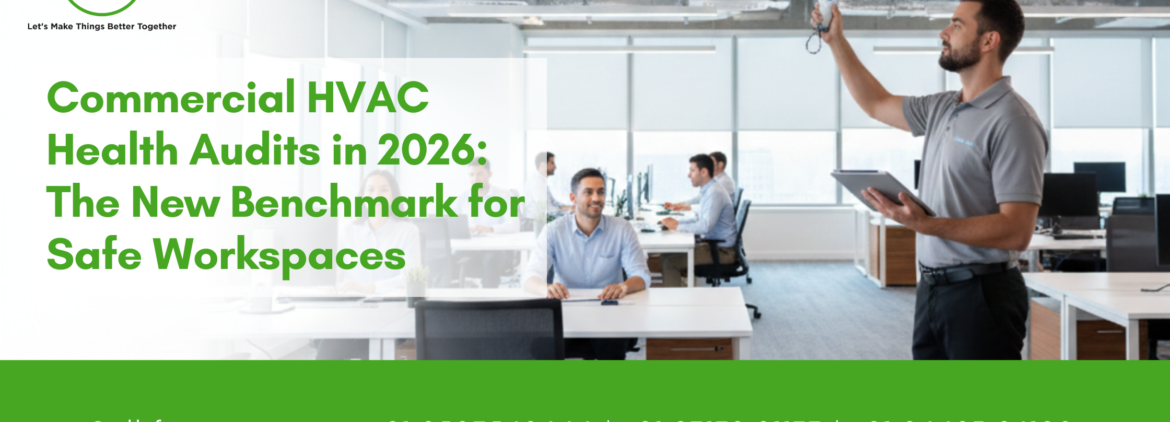
The Silent Transformation of Workplace Safety
As India moves deeper into 2026, workplace safety is no longer defined solely by fire exits, CCTV cameras, or ergonomic furniture. A quieter yet far more impactful transformation is underway one that revolves around the air employees breathe every day. Commercial HVAC Health Audits have emerged as a critical benchmark for safe, compliant, and productive workspaces.
With rising awareness around indoor air quality, post-pandemic regulatory scrutiny, and increasing expectations from employees and tenants, organizations across offices, IT parks, malls, hospitals, and educational institutions are re-evaluating the health of their HVAC systems. What was once considered a maintenance task is now recognized as a strategic health, compliance, and performance investment.
Understanding Commercial HVAC Health Audits
What Is an HVAC Health Audit?
A Commercial HVAC Health Audit is a comprehensive technical and hygiene assessment of heating, ventilation, and air conditioning systems within a building. It evaluates not only mechanical efficiency but also microbial contamination, airflow balance, filtration performance, and overall indoor air quality compliance.
Unlike routine servicing, health audits focus on how HVAC systems impact human health, energy efficiency, and regulatory adherence.
Why HVAC Health Audits Matter More in 2026
Rising Indoor Air Quality Concerns in Commercial Buildings
Studies across corporate environments consistently indicate that indoor air can be significantly more polluted than outdoor air due to trapped contaminants, inadequate ventilation, and poorly maintained duct systems. In 2026, this issue has intensified due to:
- Higher building occupancy densities
- Increased use of energy-efficient but tightly sealed structures
- Extended HVAC operating hours
- Growing sensitivity to allergens and airborne pathogens
Poor air quality now directly affects employee well-being, cognitive performance, absenteeism, and tenant satisfaction.
Key Risks of Neglecting HVAC Health Audits
Hidden Health and Operational Consequences
Organizations that overlook HVAC health audits face risks that are often invisible until they escalate:
- Circulation of mold spores, bacteria, and fine particulate matter
- Increased respiratory issues and allergy complaints
- Higher sick leave and reduced productivity
- Non-compliance with emerging indoor air quality norms
- Elevated energy consumption due to inefficient airflow
In 2026, these risks are no longer acceptable in premium commercial spaces.
Regulatory and ESG Alignment in 2026
HVAC Health Audits as a Compliance Requirement
India’s commercial real estate sector is witnessing tighter alignment with global ESG frameworks and workplace safety guidelines. HVAC health audits support:
- Occupational health and safety compliance
- Green building certifications
- Corporate ESG reporting and sustainability goals
- Tenant lease requirements in Grade A properties
Forward-thinking facility managers now view HVAC audits as a compliance necessity rather than a discretionary expense.
Core Components of a Commercial HVAC Health Audit
What Modern Audits Evaluate
A professional HVAC health audit in 2026 typically includes:
- Visual inspection of ducts, AHUs, FCUs, and diffusers
- Airflow measurement and air balancing analysis
- Dust load and particulate assessment
- Microbial and mold contamination checks
- Filter efficiency evaluation
- Energy performance and pressure loss analysis
This data-driven approach provides actionable insights rather than generic recommendations.
The Role of Technology in HVAC Health Audits
Smarter Diagnostics, Better Outcomes
Advancements in inspection tools and monitoring technologies have redefined HVAC audits:
- Robotic duct inspection systems for inaccessible areas
- High-precision air quality sensors
- Thermal imaging for leakage detection
- Digital audit reporting with photographic evidence
These innovations enable accurate diagnosis and targeted corrective actions, reducing downtime and unnecessary costs.
Why Commercial Workspaces Are Prioritizing HVAC Audits
Offices, IT Parks, and Malls Lead the Shift
In 2026, sectors actively adopting HVAC health audits include:
- Corporate offices and co-working spaces
- IT and business parks
- Shopping malls and multiplexes
- Hospitals and diagnostic centers
- Educational campuses
Tenant expectations have evolved, with indoor air quality now considered a core amenity alongside security and connectivity.
Strategic Impact on Productivity and Brand Reputation
Clean Air as a Competitive Advantage
Organizations investing in HVAC health audits experience tangible benefits:
- Improved employee concentration and comfort
- Lower health-related absenteeism
- Enhanced tenant retention
- Stronger employer branding
- Reduced long-term maintenance and energy costs
In competitive commercial environments, air quality has become a silent differentiator.
Industry Practices and Professional Expertise
Setting New Benchmarks in HVAC Hygiene
Leading facility management specialists in India are adopting structured audit frameworks that integrate engineering expertise, hygiene standards, and operational insights. Companies such as D-SOL Facilities are part of this industry evolution, contributing to higher benchmarks in HVAC hygiene, airflow optimization, and audit transparency across commercial properties.
Rather than focusing on reactive cleaning, such approaches emphasize preventive diagnostics and long-term system health.
The Future of HVAC Health Audits in India
From Optional to Essential
By the end of 2026, HVAC health audits are expected to become a standard requirement in:
- Commercial leasing agreements
- Corporate compliance checklists
- Facility management contracts
- ESG and sustainability reporting
Buildings that fail to adapt may face higher vacancy rates, compliance challenges, and reputational risks.
Conclusion: Redefining Safe Workspaces Through Air Quality
Commercial HVAC Health Audits represent a fundamental shift in how safe workspaces are defined in India. Clean, well-balanced, and contamination-free air is no longer invisible infrastructure; it is a measurable, auditable, and strategic asset.
As organizations rethink workplace wellness, energy efficiency, and compliance, HVAC health audits stand at the intersection of health, technology, and responsibility. In 2026, the benchmark for a truly safe workspace begins not at the entrance, but within the air itself.
About the Company and Its Services
D-SOL Facilities is a professional facility solutions provider specializing in HVAC duct cleaning, AHU health audits, indoor air quality assessments, kitchen exhaust system cleaning, and airflow balancing for commercial and industrial environments. The company’s core strength lies in its process-driven execution, use of advanced inspection technologies, trained technical teams, and strict adherence to safety and hygiene standards. With a focus on preventive maintenance and data-backed reporting, D-SOL Facilities delivers measurable improvements in air quality, system efficiency, and regulatory compliance for offices, malls, hospitals, and large commercial properties.
Contact Us
Call for reservation: +91 8527548444 | +91 97178 81177 | +91 84483 96120
Email: rohit@dsolfacilities.com | hemraj@dsolfacilities.com
Website: https://dsolfacilities.com/