
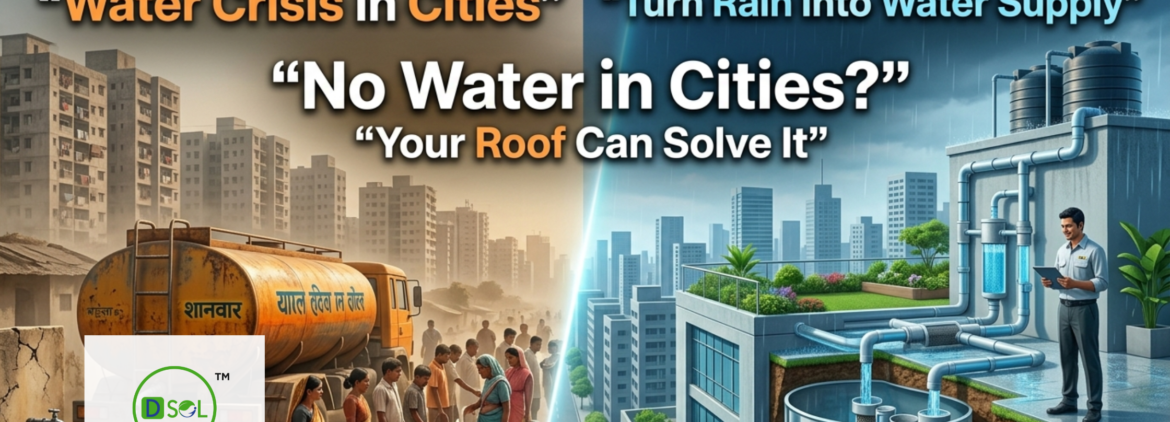
Across the world’s most dynamic metropolitan centers, a silent crisis has been unfolding for decades. The water problem in big cities is no longer a distant warning, it is a daily reality for millions. Rapid urbanization, unchecked population growth, aging infrastructure, and the relentless extraction of groundwater have pushed urban water systems to the brink of collapse. Yet amid this challenge, one ancient, elegantly simple solution has re-emerged as a technological and ecological triumph: rainwater harvesting. This complete guide explores how urban buildings can transform rainfall from a fleeting resource into a permanent, reliable water supply.
The Escalating Water Crisis in Metropolitan Centers
Understanding the Urban Water Problem in Big Cities
The water problem in big cities manifests in multiple distressing forms: drying borewells, erratic municipal supply, water tanker dependency, and seasonal droughts followed by floods. Megacities such as Bengaluru, Delhi, Mumbai, Chennai, and their global counterparts face a common predicament: impervious concrete landscapes prevent natural groundwater recharge, while demand far outstrips renewable supply. According to hydrological studies, more than 40 percent of India’s population will live in water-scarce urban areas within the next decade. The core issue is not the absence of water but the failure to capture and manage precipitation effectively. Most urban buildings shed rainwater into storm drains, where it becomes runoff carrying pollutants, ultimately wasted in rivers or oceans.
Rainwater Harvesting as a Definitive Answer to Water Scarcity
How Rainwater Harvesting Solves Water Scarcity – The Core Mechanism
Rainwater harvesting a solution to the water crisis? Absolutely. The principle is deceptively straightforward: collect, filter, store, and utilise rainwater from rooftops and paved surfaces before it becomes runoff. For any urban building, the roof acts as a vast, clean catchment area. Rainwater, free from salts, minerals, and chemical treatments, is ideal for non-potable applications such as flushing toilets, cooling towers, laundry, landscaping, and groundwater recharge. When integrated with appropriate filtration and disinfection, it can even supplement drinking water supplies. The answer to the water problem in big cities and how water harvesting solves this problem lies in decentralisation. Instead of relying solely on distant reservoirs and leaky pipelines, each building becomes its own micro water utility.
Rainwater Harvesting: A Solution to Water Crisis – Scientific and Practical Validation
A properly designed rainwater harvesting system can reduce municipal water demand by 40 to 70 percent annually. For a typical high-rise residential society, this translates to lakhs of litres of water saved every monsoon. Moreover, by recharging borewells through percolation pits, harvesting directly combats groundwater depletion, a leading cause of land subsidence and well failure in urban areas. This dual benefit of direct use and aquifer recharge makes rainwater harvesting not merely a supplementary measure but a primary strategy for urban water security.
Complete Guide to Rainwater Harvesting Systems for Urban Buildings
Key Components and Design Considerations
Implementing a rainwater harvesting project for residential and commercial complexes requires understanding five essential components:
- Catchment Surface: Typically the building roof. Flat or sloped, the material (RCC, tiles, metal) influences water quality.
- Conveyance System: Gutters and downspouts that channel rainwater from roof to storage. Stainless steel or UV-stabilised PVC ensures longevity.
- First Flush Diverters: A critical device that discards the initial rain, carrying dust, bird droppings, and atmospheric pollutants, preventing contamination.
- Filtration Units: Multiple stages including sediment filters, mesh screens, and cartridge filters remove suspended solids. For potable use, ultrafiltration or UV treatment is added.
- Storage or Recharge Structures: Above-ground or underground tanks (ferrocement, plastic, or modular block) store water. Alternatively, recharge pits, trenches, or abandoned borewells allow groundwater replenishment.
Practical Solutions and Project Implementation
Rainwater Harvesting Project for Residential and Commercial Complexes
A successful rainwater harvesting project follows a phased methodology:
Phase 1 – Assessment: Hydrological analysis of local rainfall patterns, roof area measurement, and water demand calculation. For instance, a 10,000 sq. ft. roof in a region with 800 mm annual rainfall can collect over 600,000 litres per year.
Phase 2 – Design: Engineering drawings specifying gutter slopes, pipe diameters, filter capacities, and tank volumes. Storage capacity is typically sized to meet 30–60 days of non-potable demand.
Phase 3 – Installation: Non-invasive integration with existing plumbing. Tanks can be placed in basements, parking areas, or gardens. Recharge structures are dug without disturbing foundations.
Phase 4 – Maintenance: Quarterly cleaning of gutters and filters, annual tank desludging, and inspection of first flush diverters ensure system efficiency for decades.
Water Problems and Solutions – Adapting to Different Urban Building Types
- Big Corporate Buildings: High occupancy and large roof areas make them ideal for harvesting. Treated rainwater can serve cooling plants, toilet flushing, and landscaping, reducing operating costs significantly.
- Hospitals: Water quality standards are paramount. With additional UV and chlorination, rainwater can be used for laundry, HVAC makeup water, and garden irrigation, reserving municipal supply for critical medical uses.
- Educational Institutes: Large campuses with multiple buildings and open grounds offer excellent recharge opportunities. Student engagement in monitoring creates environmental awareness.
- Large Living Societies: Clusters of buildings allow shared storage tanks and common recharge wells, distributing costs and benefits equitably among residents.
Answers to Common Questions on Rainwater Harvesting
Water Problem in Big City and How Rainwater Harvesting Solves This Problem – Expert Answers
Question: Can rainwater harvesting work in low-rainfall or densely built cities?
Answer: Yes. Even with 500 mm annual rainfall, a 5,000 sq. ft. roof collects over 2 million litres over five years. Density does not reduce roof area; it multiplies it. The solution lies in collective implementation across an entire neighbourhood.
Question: Is harvested rainwater safe for drinking?
Answer: With proper filtration (micron sediment filter, activated carbon, UV or reverse osmosis) and periodic testing, rainwater meets WHO drinking standards. For most urban buildings, it is prioritised for non-potable use to maximise volume.
Question: What is the payback period for installing a rainwater harvesting system?
Answer: For buildings replacing municipal or tanker water, the payback ranges from 18 to 36 months, depending on local water tariffs. The long-term savings, coupled with regulatory compliance (many cities mandate rainwater harvesting for plots above a certain size), make it a fiscally prudent investment.
Question: Does rainwater harvesting prevent urban flooding?
Answer: Partially. By retaining rainwater on site, harvesting reduces peak runoff into storm drains, mitigating localised flooding during intense rain events. When combined with permeable pavements and rain gardens, it forms a complete stormwater management system.
Why Urban Buildings Must Adopt Rainwater Harvesting Now
The water problem in big cities will not resolve through supply-side megaprojects alone. Dams, inter-basin transfers, and desalination plants are expensive, ecologically disruptive, and decades away from completion. Rainwater harvesting offers a distributed, low-carbon, resilient alternative that empowers every building owner and facility manager. It turns a liability (stormwater runoff) into an asset (reliable water supply). It reduces pressure on municipal utilities, lowers electricity consumption for water pumping, and restores local aquifers.
Moreover, corporate environmental, social, and governance (ESG) mandates increasingly reward water-positive interventions. Hospitals require uninterrupted water for critical care, harvesting provides a backup buffer. Educational institutions seeking green certifications integrate harvesting as a core credit. Large societies facing summer water cuts find that a well-designed system eliminates tanker dependence entirely.
Professional Implementation for Urban Buildings
Harvesting solve this problem Water problem in big city and how water harvesting solve this problem class – the evidence is conclusive. From the answer to the question “Water problem in big city and how water harvesting solve this problem answer” to the detailed “Rainwater harvesting a solution to water crisis project,” the methodology is proven, scalable, and cost-effective. Water problems and solutions are no longer theoretical; they are engineering realities. Rain water harvesting a solution to water crisis project has moved from pilot demonstrations to mandatory code in progressive cities. For every urban building, whether a corporate headquarters, a multi-speciality hospital, a university campus, or a large living society, the path to water security begins with capturing the rain that falls on your own roof.
We provide our services for big corporate buildings, hospitals, big educational institutes, and large living societies. Our approach integrates hydrological precision, civil engineering excellence, and post-installation support to deliver systems that perform reliably for decades. The unique selling proposition lies in end-to-end responsibility: from rainfall pattern analysis and customised design to installation using food-grade storage materials and IoT-based monitoring for water level and quality. We also assist with statutory compliance and certification for green building ratings. By choosing professional implementation, urban buildings transform from water consumers to water stewards, securing their future against the growing scarcity.Contact Us
Call for reservation: +91 84483 96120 | +91 8448396121
Email : rohit@dsolfacilities.com | hemraj@dsolfacilities.com
www.dsolfacilities.com