
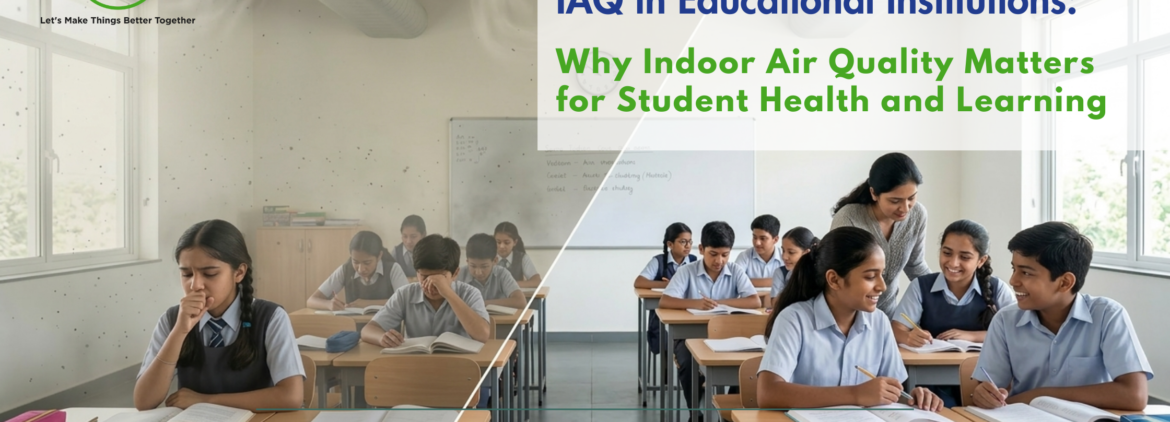
Indoor Air Quality (IAQ) has emerged as one of the most critical factors influencing health, safety, and productivity within educational institutions. Schools, colleges, and training centers accommodate large numbers of students, teachers, and staff members for extended hours each day. When the air inside classrooms and facilities is not properly managed, it can negatively affect health, concentration, and overall learning outcomes.
With increasing awareness about environmental health and building performance, educational institutions across India are recognizing the importance of maintaining safe and healthy indoor environments. Proper management of indoor air quality is no longer considered optional; it has become an essential component of responsible facility management and student welfare.
What is Indoor Air Quality (IAQ) and Why It Matters in Schools
Indoor Air Quality refers to the quality of air within and around buildings, particularly as it relates to the health and comfort of occupants. In educational settings, IAQ becomes especially important because students spend long hours inside classrooms, libraries, laboratories, and auditoriums.
Poor indoor air quality can expose students and teachers to pollutants such as dust particles, biological contaminants, chemical vapors, and excess carbon dioxide. These pollutants often originate from ventilation systems, building materials, cleaning chemicals, outdoor pollution, and human activity.
When air quality is compromised, it may lead to symptoms such as headaches, fatigue, allergies, respiratory irritation, and difficulty concentrating. For children and young adults, whose bodies are still developing, the impact of polluted indoor air can be even more significant.
Maintaining optimal IAQ supports a healthy academic environment where students can focus, learn effectively, and perform to their full potential.
Common Indoor Air Pollutants Found in Educational Institutions
Educational facilities often face unique air quality challenges due to high occupancy levels and continuous use of indoor spaces. Some of the most common pollutants affecting indoor air quality in schools include:
Dust and Particulate Matter
Dust accumulation within ventilation systems, carpets, and furniture can release fine particulate matter into the air. These microscopic particles may trigger allergies and respiratory discomfort among students.
Carbon Dioxide Buildup
Classrooms with limited ventilation can experience increased carbon dioxide levels due to human respiration. High CO₂ concentrations may lead to fatigue, reduced alertness, and decreased cognitive performance.
Biological Contaminants
Moisture buildup in HVAC systems, air ducts, and poorly maintained spaces can promote the growth of mold, bacteria, and other microorganisms. These contaminants can cause respiratory infections and allergic reactions.
Chemical Pollutants
Cleaning agents, paints, adhesives, and laboratory chemicals can release volatile organic compounds (VOCs). Prolonged exposure to such compounds may affect indoor air quality and cause irritation to the eyes, nose, and throat.
Addressing these pollutants requires regular monitoring, maintenance, and professional air quality management strategies.
The Impact of Poor Indoor Air Quality on Student Health
Healthy indoor air plays a fundamental role in supporting the physical wellbeing of students and staff members. When indoor air quality is compromised, the consequences can be immediate as well as long-term.
Respiratory Health Concerns
Students exposed to polluted indoor air may experience increased instances of coughing, wheezing, asthma symptoms, and throat irritation. Those with pre-existing respiratory conditions are particularly vulnerable.
Allergies and Sensitivities
Dust mites, mold spores, and airborne pollutants can trigger allergic reactions such as sneezing, skin irritation, and watery eyes.
Increased Absenteeism
Poor air quality may contribute to frequent illnesses among students and staff, leading to higher absenteeism and disrupted academic schedules.
Long-Term Health Risks
Continuous exposure to indoor pollutants can potentially affect lung development in younger individuals and may increase the risk of chronic respiratory issues over time.
Ensuring clean and well-ventilated air is therefore an essential responsibility for school administrators and facility managers.
How Indoor Air Quality Influences Learning and Academic Performance
Indoor air quality does not only affect physical health; it also plays a significant role in cognitive function and academic productivity.
Research has shown that students perform better in classrooms with proper ventilation and lower pollutant levels. When indoor air contains excessive carbon dioxide or particulate matter, students may experience reduced attention span and slower information processing.
Healthy indoor environments support:
- Improved concentration and mental clarity
- Higher classroom engagement
- Reduced fatigue during long study hours
- Better overall academic performance
Educational institutions that prioritize IAQ create environments where students can learn effectively without unnecessary environmental distractions.
Effective Strategies to Improve Indoor Air Quality in Schools
Improving IAQ requires a comprehensive approach that includes building design, maintenance practices, and operational policies.
Proper Ventilation Management
Adequate ventilation is the foundation of good indoor air quality. Fresh outdoor air must be introduced regularly to dilute indoor pollutants and maintain healthy oxygen levels.
Mechanical ventilation systems should be regularly inspected and balanced to ensure proper airflow throughout classrooms and facilities.
HVAC System Maintenance
Heating, ventilation, and air conditioning (HVAC) systems must be cleaned and serviced regularly. Accumulated dust and microbial growth inside ducts and air handling units can severely affect air quality.
Routine HVAC inspections help prevent the circulation of contaminated air within educational buildings.
Regular Air Duct Cleaning
Dust, debris, and biological contaminants can accumulate inside duct networks over time. Professional duct cleaning helps eliminate these pollutants and improves overall airflow efficiency.
Monitoring Air Quality Parameters
Modern indoor air quality monitoring tools allow institutions to track key parameters such as:
- Carbon dioxide levels
- Particulate matter concentration
- Temperature and humidity
- Volatile organic compounds
Monitoring helps identify potential issues before they affect occupants.
Controlling Indoor Moisture
Moisture control is essential to prevent mold growth and microbial contamination. Proper insulation, leak prevention, and humidity management can significantly improve indoor air conditions.
The Growing Importance of IAQ Compliance in India
In India, awareness about indoor environmental quality is increasing across sectors including healthcare, hospitality, corporate buildings, and educational institutions. Regulatory frameworks and international guidelines are encouraging building operators to maintain safe indoor environments.
Institutions that invest in air quality improvement not only protect student health but also strengthen their reputation as responsible and future-focused organizations.
Parents and guardians are becoming more conscious about environmental safety in schools, making IAQ management an important factor in institutional credibility.
The Role of Professional Facility Management in IAQ Improvement
Maintaining indoor air quality requires technical expertise, specialized equipment, and structured maintenance protocols. Professional facility management providers play a key role in implementing comprehensive IAQ solutions.
From air duct cleaning and HVAC system optimization to environmental monitoring and hygiene management, professional services ensure that indoor environments remain safe, efficient, and compliant with modern standards.
Organizations that prioritize preventive maintenance rather than reactive repairs benefit from improved building performance and healthier indoor conditions.
About the Services and Expertise of D-SOL Facilities
D-SOL Facilities provides specialized technical services focused on indoor environmental quality, HVAC system maintenance, and facility hygiene management. With extensive experience in serving large commercial spaces, hospitals, hotels, malls, and institutional buildings, the organization delivers structured solutions designed to enhance operational efficiency and indoor air safety. The service portfolio includes advanced air duct cleaning, AHU maintenance, air balancing, robotic duct inspection, and indoor air quality assessments. The company’s approach emphasizes precision, technology-driven cleaning methods, and adherence to international safety standards, enabling institutions to maintain healthier indoor environments while improving HVAC system performance and energy efficiency.
Contact Us
Call for reservation: +91 8527548444 | +91 97178 81177 | +91 84483 96120
Email: rohit@dsolfacilities.com | hemraj@dsolfacilities.com