
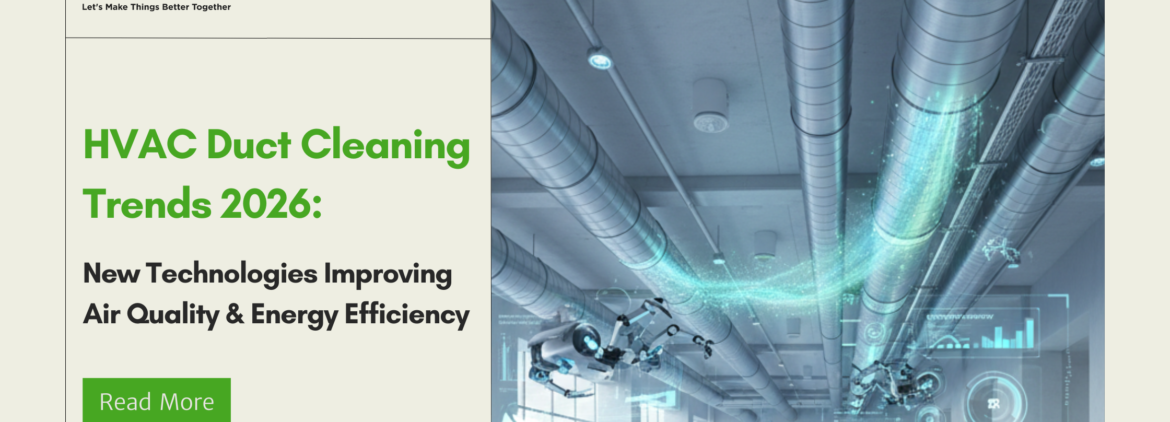
In 2026, the standards of indoor air quality (IAQ) and energy efficiency continue to escalate across industries. Buildings are no longer evaluated solely on their architectural design or aesthetics; they are measured by how effectively they safeguard occupant health, optimize energy consumption, and minimize operational costs. At the heart of this evaluation lies HVAC duct cleaning, a critical yet often underappreciated component of building maintenance that dramatically influences air quality and energy efficiency.
Contemporary HVAC systems are increasingly complex. They integrate advanced filtration, variable air volume (VAV) controls, and smart sensors that demand meticulous maintenance. Traditional duct cleaning practices are evolving, driven by new technologies that enhance precision, accessibility, and performance. This article explores the latest trends in HVAC duct cleaning in 2026, spotlighting innovations that are transforming how facilities manage ventilation systems, protect indoor environments, and achieve sustainable energy outcomes.
Understanding the Importance of HVAC Duct Cleaning in Modern Buildings
Heating, Ventilation, and Air Conditioning (HVAC) systems are the backbone of indoor environmental comfort. Whether in commercial buildings, hospitals, educational institutions, or residential complexes, HVAC systems regulate temperature, control humidity, and circulate fresh air. Over time, however, ducts accumulate dust, allergens, microbial growth, and particulate matter that degrade air quality and restrict airflow.
Poorly maintained ducts contribute to a range of issues, including:
- Increased energy consumption due to restricted airflow
- Amplified wear and tear on mechanical components
- Elevated concentrations of pollutants and allergens
- Compromised occupant health, especially for vulnerable populations
The cumulative effect of these challenges has elevated HVAC duct cleaning from a periodic chore to a strategic maintenance priority. In 2026, stakeholders are seeking solutions that marry innovation with efficiency to protect health and reduce costs.
Trend 1: Robotic Inspection and Cleaning Systems
One of the most striking advancements in HVAC duct cleaning is the integration of robotic inspection and cleaning technologies. Traditional duct cleaning involved manual labor and limited visibility into the interior of duct networks. Today, compact robotic units equipped with cameras, sensors, and articulating brushes navigate complex duct geometries with precision.
Robotic systems offer multiple advantages:
- Real-time visual inspection with high-resolution imaging
- Automated cleaning with adaptive brush and suction mechanisms
- Detection of hidden contaminants and potential duct damage
- Reduced reliance on manual entry into confined or hazardous spaces
With robots, technicians can generate detailed inspection reports, prioritize cleaning schedules based on actual conditions, and ensure thorough removal of debris and microbial buildup.
Trend 2: IoT-Enabled Air Quality Sensors
The integration of the Internet of Things (IoT) with HVAC systems has revolutionized how facilities monitor air quality. IoT-enabled sensors continuously collect data on particulate levels, volatile organic compounds (VOCs), carbon dioxide (CO₂) concentrations, and humidity. These systems communicate with building management platforms to optimize maintenance interventions.
IoT sensors provide:
- Real-time air quality diagnostics that trigger proactive cleaning
- Data analytics for trend reporting and predictive maintenance
- Alerts when contaminant thresholds are exceeded
- Connectivity with smart HVAC controls to balance airflow and filtration
By shifting from reactive to predictive maintenance, facilities reduce downtime, extend equipment lifespan, and maintain consistent IAQ standards year-round.
Trend 3: Advanced Filtration Technologies
Filtering contaminants at the source remains a crucial aspect of maintaining healthy air. In 2026, advanced filtration technologies are being incorporated within HVAC systems and duct networks to complement cleaning efforts.
Key innovations include:
- HEPA and ULPA filters: Deliver ultra-fine particulate capture, essential for healthcare settings and high-occupancy spaces.
- Electrostatic precipitators: Use electric charges to attract and capture microscopic particles.
- Photocatalytic oxidation (PCO): Neutralizes VOCs and biological contaminants using light-activated catalysts.
When integrated with regular duct cleaning, these filters reduce airborne contaminants and decrease the frequency of deep cleaning cycles.
Trend 4: AI-Driven Predictive Maintenance Platforms
Artificial intelligence (AI) is reshaping maintenance strategies across industries. HVAC systems equipped with AI analytics can forecast when ducts require cleaning based on historical performance, environmental conditions, and real-time sensor data.
AI-driven platforms deliver:
- Predictive maintenance schedules that minimize disruption
- Prioritization of cleaning tasks based on contamination risk
- Correlations between energy usage and airflow restrictions
- Continuous learning that refines maintenance plans over time
By harnessing machine learning, facilities anticipate issues before they escalate, leading to higher system efficiency and better indoor air standards.
Trend 5: Non-Invasive Cleaning Techniques
Traditional methods of duct cleaning often involved intrusive access points and manual agitation, which could cause temporary disruptions. In 2026, facilities are adopting non-invasive cleaning techniques that minimize downtime and maintain structural integrity.
Advanced approaches include:
- Air-whip systems: Deliver high-pressure bursts of air to dislodge debris without physical contact
- Negative pressure vacuuming: Extracts contaminants through sealed access points with minimal leakage
- Ultrasonic disruption: Breaks down microbial films and dust layers through high-frequency sound waves
These non-destructive techniques preserve duct materials while ensuring thorough decontamination.
Trend 6: Green Cleaning Solutions and Sustainability Integration
Sustainability has become a guiding principle in building operations. As environmental regulations tighten and tenants prioritize eco-friendly buildings, HVAC maintenance practices are aligning with green standards.
Sustainable trends include:
- Use of biodegradable and non-toxic cleaning agents
- Reduced water usage during cleaning cycles
- Energy-efficient machines and low-emission equipment
- Integration with energy management systems to reduce carbon footprint
These sustainable practices not only improve IAQ but also contribute to broader environmental objectives such as carbon reduction and resource conservation.
Trend 7: Integrated Facility Management Ecosystems
In 2026, duct cleaning is no longer an isolated task; it is part of a larger integrated facility management ecosystem. HVAC maintenance, cleaning operations, and building automation systems are interconnected through centralized management platforms.
Integrated ecosystems offer:
- Unified dashboards for air quality, energy usage, temperature, and maintenance schedules
- Cross-functional communication between HVAC technicians, facility managers, and building operators
- Centralized reporting for compliance and audit purposes
- Strategic planning insights for long-term building performance
The integration of HVAC duct cleaning into broader facility management enhances operational transparency and strategic planning.
The Benefits of Embracing Advanced Duct Cleaning Trends
Collectively, these trends are reshaping how buildings maintain HVAC systems. Facilities that adopt advanced technologies benefit from:
- Improved indoor air quality that supports occupant health
- Lower energy consumption due to optimized airflow
- Reduced maintenance downtime and long-term cost savings
- Enhanced compliance with air quality and sustainability standards
- Data-driven decision-making that supports strategic planning
These improvements translate into measurable advantages for building owners, operators, tenants, and end-users alike.
Conclusion: The Future of HVAC Duct Cleaning in 2026
As we progress through 2026, the integration of cutting-edge technology with HVAC maintenance practices heralds a new chapter in building performance. HVAC duct cleaning has emerged as a strategic priority, driven by innovations that enhance accuracy, efficiency, and sustainability. From robotic inspections and IoT sensors to predictive analytics and non-invasive techniques, the modern duct cleaning landscape empowers facilities to maintain healthier environments and operational excellence.
Buildings equipped with these advanced solutions deliver superior indoor air quality, lower energy consumption, and greater resilience in the face of evolving environmental standards. In this transformed ecosystem, HVAC duct cleaning is not just maintenance it is a strategic investment in occupant well-being and facility performance.
About the Company: Services and Unique Value Proposition
D-SOL Facilities is a leader in integrated facility management and HVAC maintenance solutions, offering a comprehensive suite of services designed to enhance air quality, energy efficiency, and operational performance. With a deep commitment to innovation and customer satisfaction, the company provides:
- HVAC Duct Cleaning and Maintenance: Utilizing advanced technology and industry best practices to ensure optimal air quality and system efficiency.
- Integrated Facility Management: Holistic building maintenance services that align HVAC performance with broader operational goals.
- Energy Efficiency Solutions: Strategies and solutions that reduce energy consumption and operational costs.
- Sustainability and Compliance Support: Helping facilities meet environmental standards through green practices and robust reporting systems.
By combining technical expertise with forward-looking solutions, the company helps clients achieve healthier, safer, and more efficient built environments. For reservations and inquiries, contact the team at +91 8527548444, +91 97178 81177, +91 84483 96120 or via rohit@dsolfacilities.com | hemraj@dsolfacilities.com.