
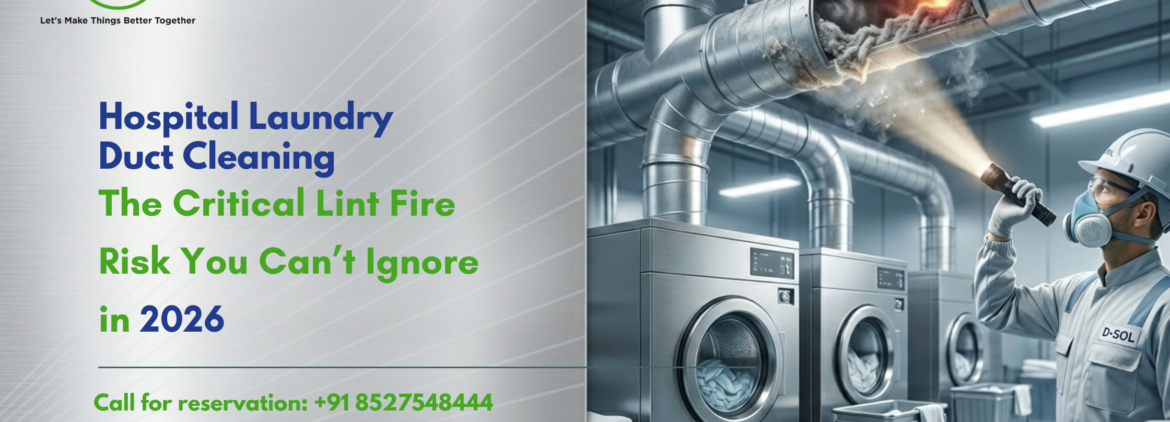
In 2026, hospital infrastructure is under sharper scrutiny than ever before. Healthcare facilities are expected to meet the highest standards of hygiene, operational efficiency, and fire safety compliance. Yet, one of the most underestimated fire hazards continues to operate silently behind walls and ceilings hospital laundry duct systems clogged with combustible lint.
Hospital Laundry Duct Cleaning is no longer a routine maintenance task; it is a critical fire prevention strategy. With increasing loads in hospital laundries due to higher patient turnover, infection control protocols, and 24/7 operations, lint accumulation has become a serious threat that healthcare administrators cannot afford to ignore.
This article explores the hidden lint fire risk in hospital laundry exhaust systems, why urgent action is required in 2026, and how professional duct cleaning safeguards healthcare infrastructure.
Why Hospital Laundry Duct Cleaning Is a Fire Safety Priority in 2026
Healthcare facilities operate industrial-scale laundry units that run continuously. Bedsheets, patient gowns, surgical linens, towels, and reusable protective garments generate substantial lint during drying cycles. This lint travels through exhaust ducts and gradually accumulates along duct walls.
Lint is highly flammable. When exposed to high dryer temperatures, friction, or restricted airflow, it can ignite rapidly. In hospital settings, where oxygen-rich environments and critical patients are present, even a minor fire can escalate into a catastrophic emergency.
Search trends such as “hospital laundry fire risk,” “healthcare dryer duct cleaning,” and “lint fire prevention in hospitals” are rising because facility managers are becoming increasingly aware of the consequences of neglect.
In 2026, fire compliance audits are stricter. Insurance providers are demanding documented preventive maintenance records. Ignoring hospital laundry duct cleaning is not just a safety lapse it is a financial and reputational risk.
The Hidden Danger: Lint Accumulation in Hospital Laundry Exhaust Systems
Hospital laundry operations are significantly more demanding than commercial laundromats. Continuous cycles generate:
- Heavy lint deposits inside exhaust ducts
- Blocked airflow pathways
- Increased dryer temperatures
- Strain on HVAC and ventilation systems
- Elevated energy consumption
When ducts are partially blocked, dryers work harder and operate hotter. Overheated motors, sparks, or friction within lint-filled ducts create ideal ignition conditions.
Many administrators assume that cleaning lint traps is sufficient. However, lint travels far beyond the visible trap and settles deep inside long horizontal and vertical duct runs. Over months, this build-up becomes dense and compact, dramatically increasing fire probability.
The danger remains invisible until it becomes a crisis.
Healthcare Laundry Fire Risk: A Growing Compliance Concern
In 2026, regulatory bodies are emphasizing preventive maintenance documentation. Hospitals must demonstrate:
- Routine inspection schedules
- Fire risk mitigation plans
- Ventilation system hygiene
- Compliance with fire safety norms
Failure to maintain clean laundry exhaust ducts can lead to:
- Fire department penalties
- Insurance claim rejection
- Operational shutdowns
- Legal liability in case of injury
Search keywords such as “hospital fire safety compliance 2026” and “industrial dryer exhaust cleaning for hospitals” reflect growing industry anxiety.
Hospitals are no longer judged solely on patient outcomes. Infrastructure safety and risk prevention now influence accreditation and public trust.
Energy Loss and Operational Inefficiency Caused by Clogged Laundry Ducts
Beyond fire hazards, neglected laundry duct systems cause significant operational inefficiencies.
Blocked ducts restrict airflow, leading to:
- Longer drying cycles
- Increased electricity consumption
- Premature equipment wear
- Frequent breakdowns
- Higher maintenance costs
In a hospital that runs laundry units round-the-clock, even a 10–15% efficiency loss translates into substantial annual energy waste.
In 2026, sustainability targets and energy optimization goals are central to hospital management strategies. Hospital Laundry Duct Cleaning directly supports energy efficiency by restoring proper airflow and reducing machine strain.
Infection Control and Air Quality Implications
Hospitals operate under strict infection control protocols. While laundry areas are separate from clinical zones, contaminated airflow can still compromise hygiene standards.
Lint accumulation can trap moisture and organic particles, creating conditions for microbial growth within duct systems. If airflow is compromised, contaminated air can recirculate or leak into surrounding areas.
Search interest in “hospital ventilation hygiene” and “laundry exhaust contamination risk” highlights growing awareness that duct cleaning is not just about fire prevention—it also supports air quality management.
Maintaining clean laundry ducts contributes to a safer indoor environment for healthcare workers and support staff.
Signs Your Hospital Laundry Duct System Needs Immediate Cleaning
Hospital administrators and facility managers should watch for these warning indicators:
- Dryers overheating frequently
- Burning smell near laundry units
- Excessive lint around vents
- Longer drying times
- Repeated equipment faults
- Increased energy bills without explanation
Ignoring these signs in a hospital setting increases the probability of operational disruption or fire incidents.
Preventive inspection schedules in 2026 should include internal duct camera assessments and airflow testing, not just superficial cleaning.
Advanced Methods Used in Professional Hospital Laundry Duct Cleaning
Modern duct cleaning is far more advanced than traditional manual sweeping. Professional service providers now use:
- High-powered industrial vacuum systems
- Rotary brush cleaning machines
- Robotic inspection devices
- Negative air pressure containment systems
- HEPA filtration for dust control
These methods ensure complete removal of lint deposits from long and complex duct layouts typical in large hospitals.
Professional cleaning minimizes downtime and ensures safe, contamination-controlled procedures aligned with healthcare standards.
Why 2026 Demands Immediate Action
Healthcare infrastructure is expanding rapidly across India and globally. Larger hospitals mean larger laundry capacities. More patients mean more linen turnover. Higher compliance expectations mean less tolerance for oversight.
The combination of:
- Increased laundry loads
- Rising energy costs
- Strict fire audits
- Insurance scrutiny
- Public safety expectations
makes Hospital Laundry Duct Cleaning a strategic necessity rather than a maintenance formality.
Ignoring lint fire risk in 2026 is equivalent to accepting avoidable danger within a healthcare facility.
Building a Preventive Maintenance Framework for Hospital Laundry Systems
To eliminate lint fire risk, hospitals should implement:
- Scheduled duct cleaning every 6–12 months (based on load volume)
- Periodic airflow testing
- Thermal monitoring of dryer units
- Fire risk assessment audits
- Maintenance documentation for compliance
A structured preventive maintenance plan reduces emergency repairs and ensures uninterrupted hospital operations.
Forward-thinking healthcare administrators are now integrating laundry duct cleaning into their annual fire safety and facility management budgets.
Conclusion: The Fire Risk You Cannot Afford to Ignore
Hospital Laundry Duct Cleaning in 2026 is not optional, it is critical infrastructure protection. Lint accumulation inside exhaust ducts poses a serious fire hazard, drains energy efficiency, and increases regulatory exposure.
Healthcare facilities are places of healing and safety. A preventable laundry fire incident undermines that mission entirely. Administrators must act proactively to eliminate hidden lint hazards and strengthen compliance frameworks.
Ignoring this issue today can result in devastating consequences tomorrow.
About the Company and Services
D-SOL Facilities provides specialized technical cleaning and fire risk mitigation services for hospitals, commercial establishments, malls, hotels, and industrial facilities. The company offers professional Laundry Duct Cleaning, Kitchen Exhaust & Duct Cleaning, HVAC Duct Cleaning, Robot Duct Cleaning, Fire Safety System Cleaning, and Indoor Air Quality Solutions. Their approach combines advanced equipment, trained technicians, structured inspection protocols, and compliance-focused documentation. With a strong emphasis on safety, precision cleaning, minimal operational disruption, and regulatory alignment, D-SOL Facilities delivers reliable solutions that reduce fire risks, improve airflow efficiency, and enhance infrastructure safety standards across high-risk environments.
Contact Us
Call for reservation: +91 8527548444 | +91 97178 81177 | +91 84483 96120
Email: rohit@dsolfacilities.com | hemraj@dsolfacilities.com