
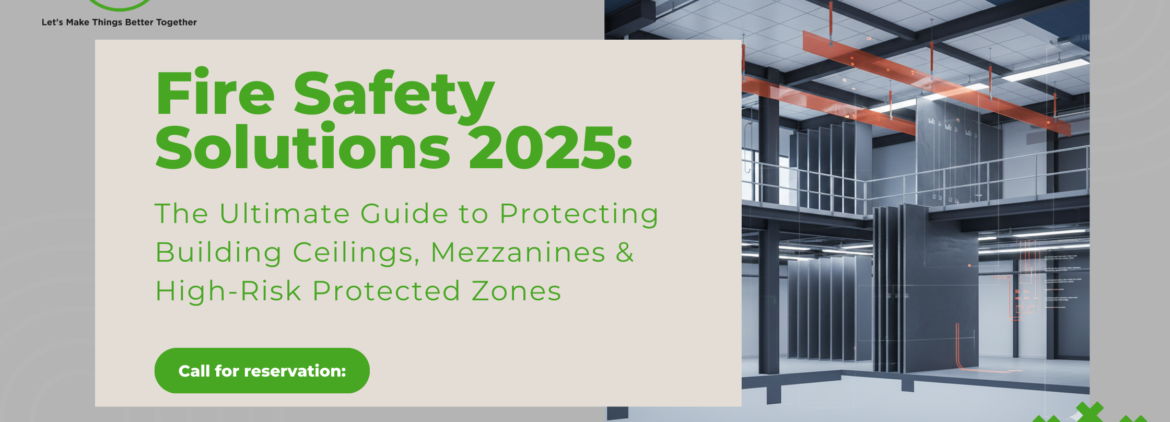
In modern construction, fire safety has evolved from a regulatory requirement into a core element of responsible building design. With rising urban density, complex architectural layouts, and increased dependence on multi-level spaces such as mezzanines and protected zones, the demand for advanced, reliable, and compliant fire safety systems is higher than ever. As we enter 2025, fire protection methods are defined by technological innovation, performance-driven materials, and a renewed focus on compartmentation for life safety and business continuity.
This comprehensive guide explores the most effective fire safety solutions for building ceilings, mezzanines, and high-risk protected zones, offering insights for architects, facility managers, builders, safety consultants, warehouse planners, and industrial operators seeking resilient fire protection strategies.
Understanding the Need for Advanced Fire Safety Solutions in 2025
Buildings today are designed to be versatile, energy-efficient, multi-functional, and aesthetically seamless. However, these advantages come with fire safety challenges such as concealed spaces, higher occupancy loads, electrical clusters, HVAC penetrations, and storage-heavy mezzanine floors.
Effective fire safety for ceilings and protected zones is essential to:
• Prevent horizontal and vertical fire spread
• Maintain tenable escape conditions
• Protect critical structural elements
• Minimize property loss and downtime
• Ensure regulatory compliance
• Safeguard equipment, inventory, data, and human life
In 2025, global best practices emphasize passive fire protection, focusing on containment through fire-resistant ceilings, compartment walls, smoke barriers, certified firestop products, and protected zones.
Smoke Sealing and Firestop Systems: The Foundation of Modern Fire Protection
Smoke is often more dangerous than flames during the early stages of a fire. Sealing gaps, joints, penetrations, and service openings is a critical element of ceiling and mezzanine safety.
Benefits of Smoke Sealing in Buildings
• Limits smoke migration across compartments
• Enhances visibility during evacuation
• Improves indoor air quality and reduces toxic exposure
• Ensures compliance with fire safety codes
• Reduces HVAC load by sealing air leak points
High-quality systems, such as those from recognised brands like Hilti and Ameetuf—provide airtight, durable, and code-compliant smoke seals ideal for ceilings, joints, ducts, cable trays, and mezzanine perimeters.
Fire-Resistant Ceilings: A Crucial Horizontal Barrier
Fire-resistant ceilings form one of the most important passive fire protection elements in modern structures. They restrict fire from moving between levels, protect structural steel, and maintain the stability of the occupied spaces above.
Key Features of Modern Fire-Resistant Ceilings
• Ability to withstand extreme heat for prolonged periods
• Horizontal fire separation for large compartments
• Compatibility with steel and timber frameworks
• Aesthetic integration with interior design
• Resistance to hose-stream pressure during firefighting
• Tested and certified to global fire performance standards
Various types of ceilings offer different advantages depending on building requirements.
Types of Fire-Resistant Ceiling Systems in 2025
1. Self-Supporting Membrane Ceilings
Suitable for large compartments and high spans. These ceilings:
• Do not require additional hangers
• Provide symmetrical or asymmetrical access
• Include fire-rated hatches for maintenance
• Offer excellent load-bearing performance under fire exposure
2. Suspended Ceiling Protection to Steel Beams
Steel is strong but vulnerable to heat-induced deformation. Fire-resistant suspended ceilings provide:
• Thermal protection to load-bearing beams
• Extended structural stability during fire
• Enhanced safety for floors and mezzanines above
3. Trafficable Ceiling Systems
Ideal for industrial settings, warehouses, and maintenance-heavy buildings, these systems:
• Are installed from the top side
• Use high-grade fire-resistant boards
• Allow safe access for technicians
• Offer robustness and long-term durability
4. Suspended Membrane Ceilings
These solutions are:
• Easy to install from below
• Suitable for offices, retail areas, and commercial spaces
• Designed with attention to hanger height and structural rigidity
• Reliable for both fire resistance and aesthetic performance
Fire Safety for Mezzanines: Protecting Multi-Level Structures
Mezzanines expand usable space but also introduce fire risks due to exposed structural components, storage accumulations, and increased load-bearing requirements.
Fire Protection Needs for Mezzanines
• Stability of the mezzanine floor system under fire conditions
• Protection of steel or timber framing
• Smoke sealing at mezzanine edges
• Compartmentation where mezzanines cover critical zones
• Ensuring safe evacuation paths beneath and above the mezzanine
Fire-rated mezzanine systems ensure that the space remains structurally sound while preventing rapid flame and smoke spread.
Protected Zones: Reinforcing High-Risk Areas in Buildings
Protected zones are sections designed to prevent fire from spreading into sensitive or mission-critical areas.
Essential Components of Protected Zones
• Fire-resistant ceilings and walls
• Fire-rated doors and frames
• Smoke seals at roof junctions and wall intersections
• Firestop systems around ducts, cables, and conduits
• Compartmentation of roof areas with fire-resistant belts
Protected zones safeguard areas such as electrical rooms, server rooms, warehouse racks, manufacturing lines, and high-value storage.
General Design Considerations for Effective Fire Protection Systems
To create durable and compliant fire-resistant ceilings and protected zones, several technical elements must be integrated:
• Supporting structure compatibility (steel or timber)
• Acoustic performance to reduce noise transfer
• Fixing techniques including fire-rated screws and assemblies
• Expansion gaps to accommodate deformation during fire
• Integration with HVAC, lighting, and electrical services
• Accessibility for inspection and maintenance
A balanced design ensures long-term safety, structural resilience, and operational efficiency.
Smoke Sealing, Fire-Resistant Ceilings & Advanced Fire Technologies
High-quality firestop systems from reliable manufacturers help ensure:
• Long-lasting performance
• International certifications
• Ease of installation
• Cost-effective solutions
• Availability of eco-friendly options
When implemented by experts, these solutions significantly enhance the fire resilience of ceilings, mezzanines, and enclosed areas.
About D-SOL Facilities and Their Expertise
D-SOL Facilities provides advanced fire protection solutions with a focus on performance, compliance, and client satisfaction. Their expertise spans smoke sealing, fire-resistant ceilings, mezzanine protection, and application of premium firestop technologies. The team ensures seamless integration of fire-resistant materials and industry-leading coatings across diverse building types.
Services and USPs
Their capabilities include:
• Fire-proof paints and intumescent coatings
• Fire-stop barriers for HT and LT cables
• Fire-resistant coatings for structural steel, gypsum boards, ducts, plywood, fabrics, and corrugated materials
• Vapour barrier coatings
• Anti-radiation, anti-magnetic, anti-bacterial, and marine-grade coatings
• Heat-resistant and insulating paints
• Specialized industrial coatings including silver heat-resistant paint, conductive coatings, epoxy and polyurethane paints
• Fire-resistant mortars, sealants, boards, and pillows
• Advanced protective coatings for AC coils, metals, and food-grade environments
D-SOL Facilities stands out through its technical expertise, certified materials, tailored solutions, and end-to-end service approach.
Contact Us
Call for reservation: +91 8527548444 | +91 97178 81177 | +91 84483 96120
Email: rohit@dsolfacilities.com | hemraj@dsolfacilities.com